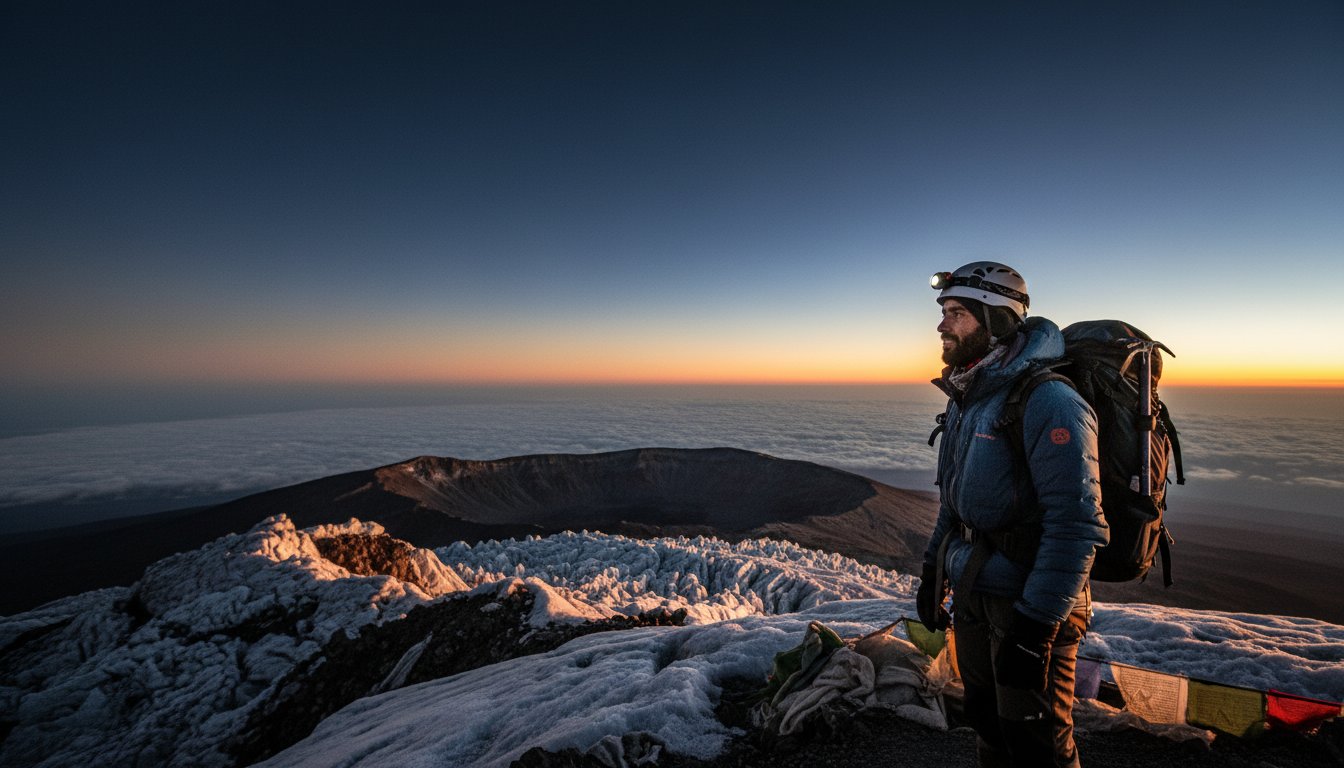
In February 2024, I stood at Uhuru Peak, 5,895m (19,341ft), watching the sun hit the glaciers in total silence, yet the groundwork for that moment started months earlier during a sweltering 45°C afternoon in Dubai. It’s a common struggle for adventurers in the Middle East; you want the summit, but the fear of being rained out or stuck in a human traffic jam on the Marangu route feels like a massive gamble. You’ve probably wondered if training in the desert heat is even enough to prepare you for the sub-zero temperatures of the roof of Africa.
I understand those concerns because I’ve lived them. Finding the best time to climb kilimanjaro isn’t just about checking a weather map; it’s about balancing Tanzanian seasons with the 2026 UAE and GCC public holiday schedule to maximise your recovery. In this guide, I’ll share my insights on the two reliable dry windows, how to avoid the 30% surge in crowds during peak months, and the exact logistics you need for a seamless trip from the Gulf. We’ll map out a strategy that takes you from the sand dunes to the snowcaps with total confidence.
Key Takeaways
- Identify the best time to climb kilimanjaro by mastering the mountain’s seasonal cycles, from the warm “sweet spot” in January to the reliable trekking conditions of June.
- Learn to manage the “heat shock” of transitioning from 45°C in the Gulf to -15°C at the 5,895m (19,341ft) summit with specialist timing advice for Middle East adventurers.
- Discover how to strategically align your climb with UAE public holidays while selecting a route that balances crowd density with high acclimatisation success rates.
- Understand why your route choice must match the season, such as using the Rongai’s rain shadow to stay dry during the more adventurous “short rains” periods.
- Gain field-tested insights on maintaining a “pole pole” pace during peak months to ensure your journey to the roof of Africa is as safe as it is transformative.
The Seasonal Rhythms of Kilimanjaro: Dry vs. Wet Cycles
Kilimanjaro doesn’t follow the traditional four seasons you might expect. Instead, the mountain moves through two distinct dry windows and two rainy periods. Finding the best time to climb kilimanjaro requires understanding these cycles, especially if you’re travelling from the humidity of Dubai or the heat of the Middle East. Mount Kilimanjaro dictates its own weather patterns due to its massive size and proximity to the equator.
The ‘Big Rains’ arrive between April and May, often bringing heavy, persistent downpours that turn the lower forest trails into deep mud. I’ve found that the ‘Short Rains’ in November and December are less predictable. You might start a morning with clear blue skies, only to be caught in a sudden afternoon deluge at 3500m (11,483ft). For most climbers, these wet months increase the difficulty and risk significantly.
To better understand this concept, watch this helpful video:
Precipitation is only half the story. When you’re standing at 5000m (16,404ft), temperature matters just as much as rain. Wet gear at that altitude doesn’t just make you uncomfortable; it freezes. The mountain’s five ecological zones react differently to these shifts. The rainforest (1800m to 2800m) stays damp and humid regardless of the season, while the arctic desert above 5000m (16,404ft) can drop to -20°C during the summit push. Proper timing ensures you aren’t fighting the elements and the altitude simultaneously.
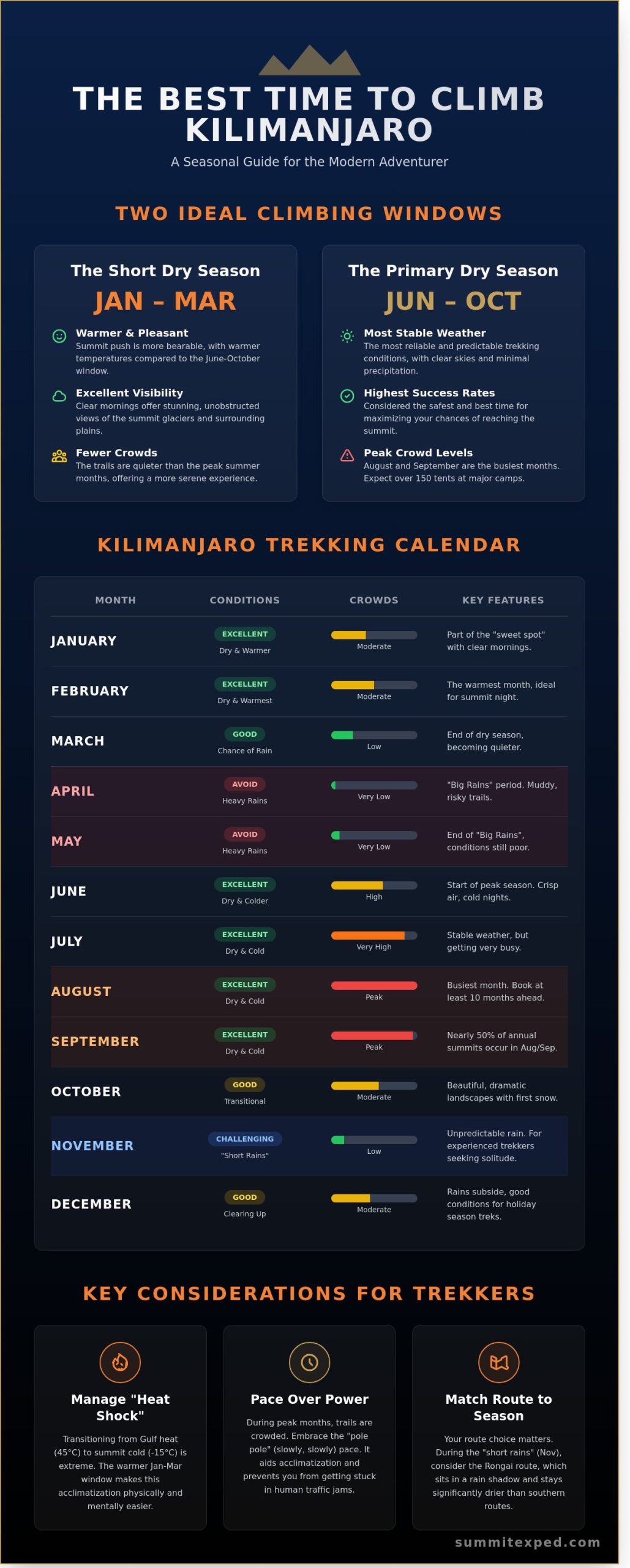
The Primary Dry Season: June to October
This window is widely considered the best time to climb kilimanjaro for summit success because the weather remains remarkably stable. You can expect clear skies and spectacular views of the African plains from the Shira Plateau. It’s the peak tourist season on the mountain. During August, I’ve seen camp sites like Barranco filled with over 150 tents. If you don’t mind the company of other trekking groups, the reliability of this season is hard to beat.
The Short Dry Season: January to March
Conditions are generally warmer than the June window, which makes the midnight summit push much more bearable for your hands and feet. Visibility is usually excellent, and the trails feel quieter than during the northern hemisphere summer months. The short dry season is the optimal window for those seeking warmth over crowd-free trails.
A Month-by-Month Guide to the Kilimanjaro Trekking Calendar
Kilimanjaro doesn’t follow the traditional four seasons you might expect. Instead, your experience is dictated by the rhythm of the wet and dry cycles. January and February are what I consider the sweet spot for the mountain. During these months, you’ll encounter warmer temperatures and exceptionally clear mornings. For my clients travelling from the Middle East, this window offers a refreshing escape from the Dubai winter while providing the best visibility for that first glimpse of the summit glaciers.
As we move into June and July, the air becomes crisper. The nights are significantly colder, often dropping well below freezing at the higher camps, but the trekking conditions remain incredibly reliable. If you prefer stable weather and don’t mind layering up, this is a prime window. However, August and September are the busiest months on the mountain. Recent trekking data shows that nearly 50 percent of all annual summits occur during this period. If you’re planning for 2026, I suggest booking your expedition at least 10 months in advance to secure your preferred route and crew.
October serves as a fascinating transition month. It is a time of change where you might catch the first delicate dustings of snow on the summit. This adds a dramatic, ethereal quality to the landscape that many photographers crave. Understanding the best time to climb Kilimanjaro requires balancing these weather patterns against your own tolerance for crowds and cold.
Trekking in the ‘Wet’ Months: April, May, and November
The “Big Rains” of April and May are a serious undertaking. Trails transform into deep mud, and thick clouds often obscure the view from Uhuru Peak. I rarely suggest these months unless you’re an elite hiker looking to test your resilience against the elements. I do, however, occasionally recommend November for experienced trekkers. While it marks the “Short Rains”, the solitude is absolute. You might find yourself alone in the silence of the Barranco Valley, a rarity on this popular peak. The psychological toll of wet gear is real; I always tell my teams that dry bags and high-quality gaiters are non-negotiable for staying focused when the clouds close in.
The Magic of a Full Moon Summit
Summiting under a full moon is a bucket list experience that I’ve seen move many trekkers to tears. There is a practical benefit too. You rarely need your headtorch for the final 1200m (3,937ft) push because the lunar light reflects off the ice, illuminating the path with a silver glow. The downside is the human element. Certain routes, particularly Machame and Lemosho, become bottlenecked during the three days surrounding the full moon. If you want the light without the crowds, I often advise my clients to aim for a summit date two days after the peak of the moon. You can learn more about how we structure these specialized itineraries at Caroline Leon expeditions.
- January-February: Best for warmth and high visibility.
- June-August: Cold but very dry and stable.
- September: Peak season; expect busy trails.
- November: High risk of rain but offers incredible solitude.
No matter which month you choose, remember the golden rule of the mountain: pole pole. Moving slowly and allowing your body to adapt is far more important than the specific date on the calendar.
Beyond the Rain: Balancing Crowd Density and Success Rates
Success on the mountain isn’t just about reaching the top; it’s about the quality of the journey that gets you there. When you’re trying to figure out the best time to climb kilimanjaro, you’re choosing more than just a dry jacket. You’re choosing the quality of your breath. If you’re stuck in a queue of 200 people on the Machame route, your “pole pole” (slowly, slowly) rhythm breaks. You stop. You start. This jerky movement burns through glycogen stores and messes with your heart rate, which are two things you can’t afford at high altitude.
Finding the best time to climb kilimanjaro involves balancing success statistics against the reality of trail congestion. While dry seasons show higher completion rates on paper, those numbers are often inflated because guides can navigate the paths more easily. However, the physical toll of a crowded mountain is real. I’ve seen climbers lose their focus and “summit fever” take over simply because they felt pressured by the groups behind them.
Managing the ‘Kilimanjaro Traffic’
During the July peak, the Machame and Marangu routes can feel like a busy Dubai mall. This bustle strips away the “spirit of the mountain.” My teams manage this by choosing camp placements at least 200 metres (656ft) away from the main clusters whenever the terrain allows. You need that quiet time at 4000m (13,123ft) to reflect and let your nervous system settle. I often talk about the importance of mental pacing on my YouTube channel, but maintaining that focus is much harder when you’re hearing someone else’s music from a neighbouring tent. If you want a true wilderness experience, avoid the second week of August and the week between Christmas and New Year.
Acclimatisation and Seasonality
Cold weather is a silent energy thief. In the colder months of June and July, your body works roughly 20% harder just to maintain its core temperature. This leaves less energy for the complex cellular work of altitude adaptation. I’ve seen how Kilimanjaro’s changing climate is making these traditional seasons less predictable, with moisture lingering longer than it did 15 years ago. Because of this, I suggest adding an extra day to your itinerary if you’re climbing during the colder windows. That extra 24 hours gives your red blood cells time to catch up without the added stress of shivering through the night.
For many of the climbers I lead from the Middle East, the “shoulder seasons” of late March or early October offer the sweet spot. You might get a dusting of snow or a light afternoon mist, but you’ll see a 15% to 20% reduction in trail traffic. This silence is what allows you to actually hear the mountain and, more importantly, hear your own breath. It turns a physical slog into a transformative experience.
The Middle East Perspective: Planning from Dubai and the GCC
Living in the Gulf means we often plan our lives around the extreme heat and the public holiday calendar. For most of my clients, the best time to climb kilimanjaro is when the UAE National Day long weekend or the Eid Al Adha break aligns with Tanzania’s dry seasons. In 2026, these holidays offer a strategic way to tackle the mountain without burning through your entire annual leave balance. Choosing the best time to climb kilimanjaro also means accounting for the “Heat Shock” factor. Transitioning from a 45°C (113°F) Dubai summer to a -15°C (5°F) summit night at 5895m (19,341ft) is a brutal test for the body. It isn’t just about the cold; it’s about how the desert heat saps your hydration levels before you even step off the plane.
Logistically, we’re in a prime position for this adventure. Direct flights from Dubai (DXB) via flydubai or connecting through Doha (DOH) with Qatar Airways put you at Kilimanjaro International (JRO) in about 5.5 hours. This convenience is a double-edged sword because the quick transition doesn’t give your body much time to “cool down” from the Gulf’s intensity. I’ve seen many climbers struggle simply because they arrived at the trailhead already depleted by the desert sun. You need to arrive in Moshi at least 48 hours before your climb starts to rehydrate and reset your internal clock.
Training in the UAE and Oman
Physical prep in the sand requires creativity. I always suggest using the Hajar Mountains in Oman for weekend endurance treks or hitting the steep inclines of Jebel Hafeet in Al Ain for weighted pack walks. During the peak summer months, don’t risk heatstroke outdoors; instead, utilise indoor altitude training centres in Dubai to get your lungs accustomed to thin air. You should commit to a structured 3-month training block before your expedition to ensure your cardiovascular system is ready for the 5895m (19,341ft) peak. For a comprehensive approach to training for kilimanjaro from the Middle East, including specific workout routines adapted for the desert climate, you’ll need strategies that work with your local environment rather than against it.
The ‘Summer Gap’ Strategy
September is often the “sweet spot” for GCC residents. It allows you to escape the soul-crushing humidity of the Gulf’s late summer while catching the final weeks of Tanzania’s long dry season. Sourcing gear in a region that rarely sees snow can be tricky, so focus on finding high-quality merino wool and technical hardshells that offer breathability. For specific recommendations on what to pack, I’ve put together detailed gear reviews on Caroline Leon’s YouTube channel. Most local shops in Mall of the Emirates carry the basics, but for specialised high-altitude boots, you might need to order early or visit specialist boutiques in Al Quoz.
Choosing Your Window: Matching Your Route to the Season
Selecting your route is just as critical as picking your dates. The mountain creates its own weather systems, and different faces of the peak react differently to the changing seasons. If you are looking for the best time to climb kilimanjaro but find your holiday dates are fixed during the wetter months, your choice of path will determine your success.
The Rongai Route is my top recommendation for the shorter rainy seasons of November and March. It is the only trail that approaches from the North, sitting in the mountain’s rain shadow. While the southern slopes get drenched, Rongai stays significantly drier, providing a tactical advantage for those who can’t avoid the “green” seasons. For those targeting the peak dry months between July and September, the Lemosho and Northern Circuit routes are the crown jewels. These longer paths offer 360-degree views of the plateau, and clear skies during these months ensure you see the curvature of the earth as the sun rises over Mawenzi.
If you find yourself climbing in April or May, Marangu is your best backup. It’s often called the “Whisky” route, and it’s the only one featuring permanent A-frame huts. Having a wooden roof and a dry floor when it’s pouring outside is a luxury that can save your morale and your summit bid. Before you pay your deposit, run through this final checklist:
- Weather: Are you prepared for the specific moisture levels of your chosen month?
- Crowds: Do you prefer the camaraderie of a busy trail or the silence of a private mountain?
- Budget: Remember that “shoulder” seasons often offer better value for flights from Dubai.
- Fitness: Wetter seasons require more core stability to manage slippery, muddy trails.
The Expert’s Recommendation for First-Timers
I’ve spent years guiding climbers toward that final scree slope, and I personally love the late September window. By the 20th of September, the mid-summer crowds have thinned by roughly 25%, and the air takes on a crisp, clear quality that is perfect for photography. You must set realistic expectations for the 5895m (19,341ft) summit; the oxygen levels remain at 50% of what you’re breathing in Dubai, regardless of whether it’s sunny or snowing. Success isn’t just about the month; it’s about your Climbing Mount Kilimanjaro: The Definitive Guide preparation and mindset.
Final Preparations: What to Do Next
Our 2026 expedition calendar is now open for adventurers joining us from across the Middle East. Don’t just book for the weather forecast. Book for the team that supports you when the conditions turn. I’ve seen perfectly clear days turn into 60km/h windstorms in minutes. The most successful climbers are those who choose a team with deep local roots and a safety-first culture. When you’re ready to book your Kilimanjaro climb for 2026, having a guide who understands the unique challenges facing Dubai and GCC-based adventurers makes all the difference. Join a Summit Expeditions climb and let us handle the logistics while you focus on the journey of a lifetime. Your 5895m (19,341ft) milestone is waiting.
Claim Your Place on the Roof of Africa
I’ve spent years navigating high-altitude peaks, and I can tell you that Kilimanjaro rewards those who respect its natural rhythm. Your choice between the crisp, clear mornings of the January window and the steady, dry weather of the June to October season will define your entire experience on the trail. My team and I focus on these specific windows to ensure our safety-first protocols and specialised logistics for Middle East explorers translate into our 95% summit success rate. When you’re standing at 5,895m (19,341ft), the months of physical training and careful planning finally click into place. Determining the best time to climb kilimanjaro is the first real step in your expedition. Having a partner like Summit Expeditions, led by myself and our expert guides, is what gets you to Uhuru Peak safely. We understand the unique transition from the GCC heat to the Tanzanian wilderness. I’ll be there to ensure your 2026 climb is handled with the professional care it deserves. Let’s get you to the top.
Book your 2026 Kilimanjaro Summit with Summit Expeditions
Frequently Asked Questions
Is it possible to climb Kilimanjaro during the rainy season in April or May?
You can climb in April or May, but I usually advise against it unless you enjoy extreme solitude and don’t mind getting wet. During these months, rainfall often exceeds 250mm in the rainforest zone, making trails incredibly slippery and slow. Only about 10% of our expeditions run during this window. If you do go, I recommend the Rongai route because it sits in the rain shadow and stays drier.
Which month is the absolute coldest on the Kilimanjaro summit?
July and August are the coldest months on the summit. At Uhuru Peak, which stands at 5,895m (19,341ft), nighttime temperatures frequently plummet to -20°C (-4°F) when you factor in the wind chill. I always tell my climbers to pack a sleeping bag rated for -25°C for these months. The wind across the saddle is brutal; high-quality base layers are non-negotiable for your summit bid.
How far in advance should I book my climb if I want to go during a full moon?
You should book your full moon climb at least 10 to 12 months in advance to secure your preferred route. These dates are the most popular in the 2026 calendar, especially during the dry seasons. Because park permits and high-quality camps have limited capacity, the 5-day window around the full moon sells out faster than any other period. Don’t leave it until the last minute.
Does the ‘best time’ differ depending on which route I choose?
The best time to climb kilimanjaro changes based on your route choice. If you’re looking at the Rongai route, you can climb during the slightly wetter months because the north side receives 40% less precipitation. However, if you’ve set your heart on the Lemosho or Machame routes, you really want to stick to the dry windows of January or August to avoid the heavy mud in the rainforest.
Are there fewer crowds if I climb during the short dry season in February?
February offers a fantastic balance with roughly 25% fewer climbers than the peak month of August. It’s a short dry season that many people overlook. I find the clarity of the air in February provides some of the best photography conditions. You’ll get those crisp, clear views of the glaciers without the long queues of people at the Barranco Wall or the summit sign.
What happens if it rains during my trek—will the expedition be cancelled?
We don’t cancel expeditions for rain; we simply adapt our pace and gear. In my 15 years of leading treks, we’ve only stopped for extreme safety risks like lightning or winds exceeding 80kph (50mph). Your porters will ensure your kit stays protected in waterproof bags, and we’ll focus on a slow “pole pole” movement to keep your heart rate steady. It’s all part of the raw mountain experience.
Is January a good time for a beginner to attempt the summit?
January is a brilliant time for a beginner to find the best time to climb kilimanjaro. With an average success rate of 88% across our 8-day routes, the stable weather makes acclimatisation much easier. The skies are usually clear, which helps with morale when you’re pushing through the final 1,000m (3,280ft) of vertical gain. It’s much less intimidating than climbing in the biting winds of July.
How does the weather in Tanzania compare to the summer heat in the Middle East?
Kilimanjaro is a total escape from the 48°C (118°F) summer heat of Dubai or Riyadh. While the Middle East is scorching in July, you’ll be trekking in temperatures ranging from 20°C (68°F) at the gate to -15°C (5°F) at the summit. I often see climbers from the Gulf struggle more with the cold than the climb itself. It’s a massive thermal shock that requires specific layering.