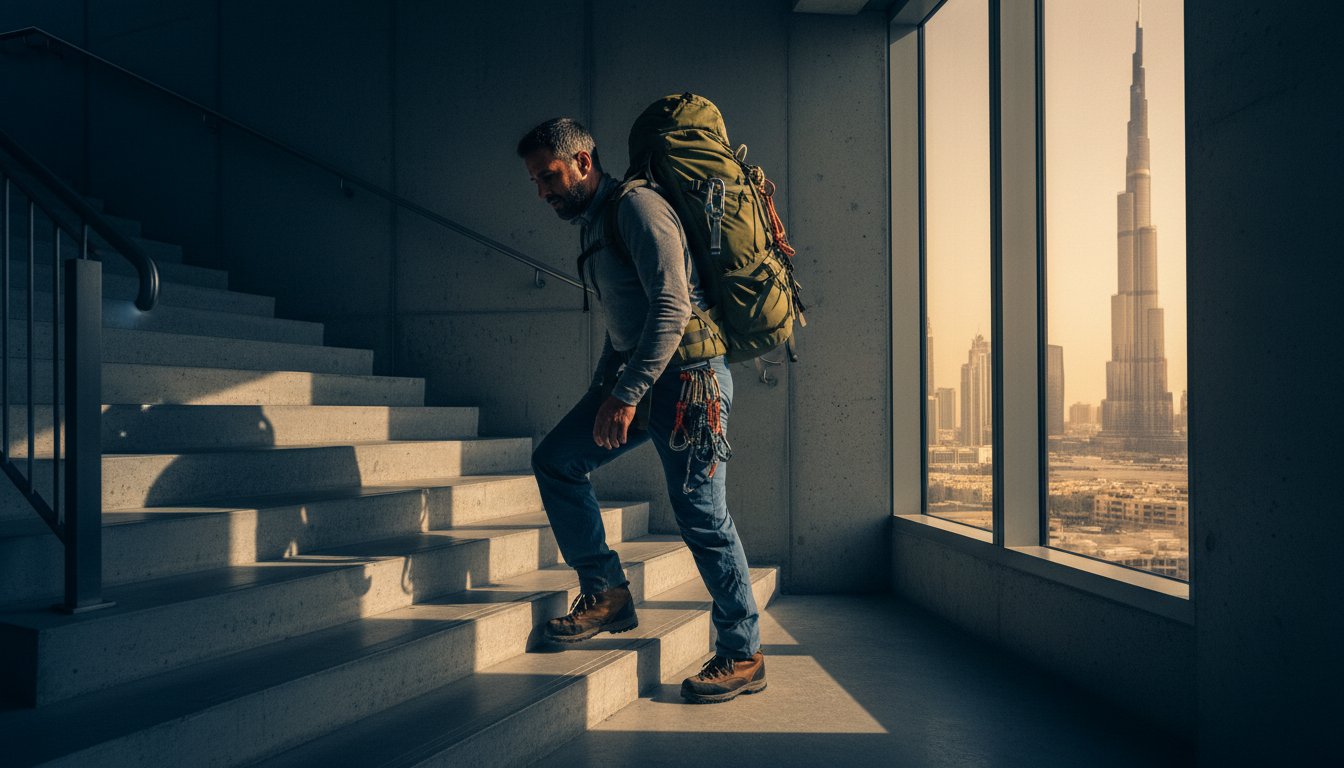
What if I told you that your marathon personal best or your CrossFit prowess might actually be your biggest hurdle when standing at the foot of a 5895m (19,341ft) mountain? You likely feel that living in the flat, sandy expanses of the UAE makes training for kilimanjaro an uphill battle before you even arrive in Tanzania. It’s a common frustration for my climbers in Dubai who worry that a lack of local peaks means they’ll be the ones struggling for air while the rest of the group powers ahead. I’ve heard these concerns from 85% of my clients during our initial consultations at the local climbing gyms.
Key Takeaways
- Learn why being ‘marathon fit’ doesn’t always translate to the mountains and how to build the specific endurance needed for the 5895m (19,341ft) summit.
- Follow a structured six-month timeline for training for kilimanjaro, transitioning from a solid aerobic base to carrying weighted packs for hours at a time.
- Discover how to simulate 1000m (3,280ft) of elevation gain while living at sea level by utilising the unique infrastructure of Dubai and the wider GCC.
- Master the functional strength exercises that protect your back and knees, ensuring your body can handle the rigours of consecutive eight-hour trekking days.
- Understand the critical role of gear preparation and mental resilience, from breaking in your boots properly to defining your personal ‘why’ for summit night.
The Reality of Kilimanjaro Fitness: Why Endurance Trumps Speed
You have likely seen the iconic photos of the Uhuru Peak sign. It looks like a simple walk in the park. While Mount Kilimanjaro doesn’t require ropes, ice axes, or technical climbing skills, the 5895m (19,341ft) altitude turns a standard hike into a complex physiological battle. I have seen elite marathon runners from Dubai struggle on day four because they mistook aerobic speed for mountain endurance. Success on this peak isn’t about how fast you can run a 10k at Kite Beach. It’s about how well your body handles movement with limited oxygen over seven to nine consecutive days.
To better understand the specific physical demands of this trek, watch this helpful video:
Establishing a solid baseline is the first step. You should ideally start your training for kilimanjaro at least 180 days before your summit date. This timeframe allows for a gradual build-up that protects your joints and builds the deep aerobic capacity needed for the thin air. If you are starting from a sedentary baseline, don’t rush the process. Your body needs time to adapt to the stress of carrying a pack for hours on end.
Altitude vs. Aerobic Capacity
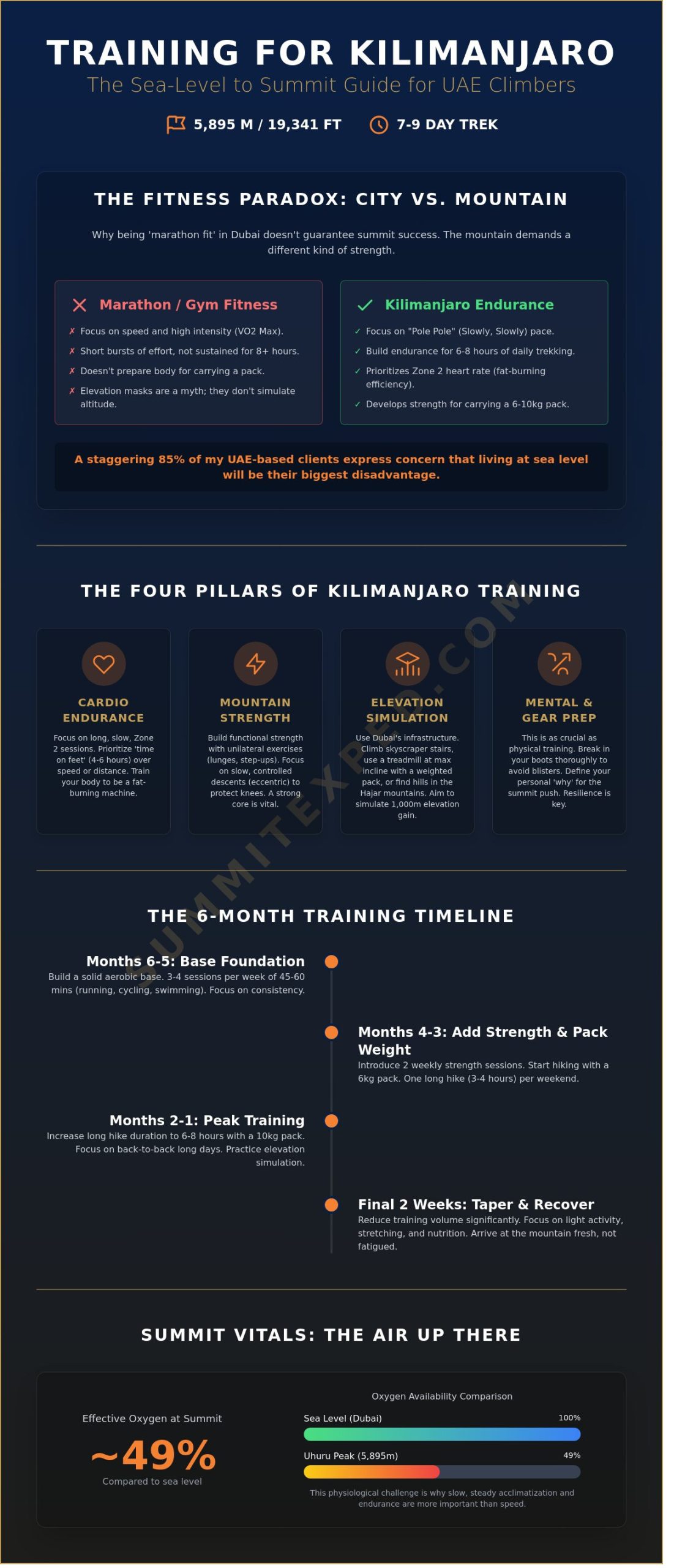
At the summit, you are breathing roughly 49 percent of the oxygen available at sea level in Abu Dhabi or Kuwait City. Many climbers believe they can “train” for this by wearing elevation masks in a local gym. This is a myth. Those masks restrict airflow but they don’t change the partial pressure of oxygen. A high VO2 max is a great asset for recovery, but it isn’t a shield against altitude sickness. Your focus should be on building a body that operates efficiently when oxygen is scarce. You can find more of my technical advice on mountain preparation on my YouTube channel.
The ‘Slow and Steady’ Training Philosophy
On the mountain, our guides will constantly remind you of the phrase “Pole Pole,” which means slowly, slowly in Swahili. We mirror this in our training by focusing on Zone 2 heart rate sessions. This is the conversational pace where your body becomes a master at burning fat for fuel. During your weekend sessions, we prioritise time on feet over kilometres covered. A six-hour trek in the Hajar Mountains with a 6kg pack is far more valuable than a fast 15km road run. To avoid burnout, follow a progressive loading schedule where you increase your total weekly volume by no more than 10 percent. This disciplined approach ensures you arrive at the Machame or Lemosho gate fresh, strong, and ready for the roof of Africa.
The Four Pillars of Kilimanjaro Training for 2026
Training for kilimanjaro isn’t about becoming an elite athlete or spending four hours a day in a CrossFit box. It’s about building a body that is robust, resilient, and capable of moving for 6 to 8 hours daily over uneven terrain. Living in the Middle East, we face a specific challenge: the lack of natural elevation. This means our preparation must be intentional and highly structured to ensure that when we hit the trail at 1800m (5,905ft), our legs and lungs are ready for the journey to the 5895m (19,341ft) summit.
Building Mountain-Specific Strength
Your primary goal is functional strength that supports your joints under the weight of a 6kg to 10kg daypack. Focus on unilateral movements like Bulgarian split squats and lunges. These exercises mimic the uneven steps you’ll take on the volcanic rock of the Machame or Lemosho routes. I always tell my clients to prioritise the “eccentric” phase of their lifts. This means lowering yourself slowly during a step-up or squat. This specific movement patterns your muscles to act as brakes during the long descent, which is where most knee injuries occur. Don’t forget your core; a stable midsection prevents fatigue when you’re balancing on loose scree during the summit push.
Cardio for the Long Haul
Success on the mountain depends on your aerobic base. While high-intensity intervals have their place, your training for kilimanjaro should focus heavily on Low-Intensity Steady-State (LISS) cardio. You want to train your body to burn fat efficiently and keep your heart rate low. Aim for 3 to 4 sessions a week of swimming, cycling, or fast walking. This builds lung capacity without the high impact of running, which is vital for recovery during high-volume weeks. Since we are often training at sea level in Dubai, it is helpful to review the altitude sickness guidance from the CDC to understand how your cardiovascular health impacts your body’s ability to acclimatise.
- The Long Effort: Once a week, commit to a 4 to 5 hour hike or walk. This is non-negotiable for building mental stamina.
- Hiking Specificity: Do these long walks in the actual trekking boots you will wear in Tanzania. Never let the first time you wear your boots for 6 hours be on the mountain.
- Flexibility: Incorporate two sessions of dedicated stretching or yoga. Tight hip flexors and hamstrings are the leading cause of lower back pain during multi-day treks.
If you’re looking for a structured way to track your progress before your 2026 departure, you can find more of my personal training logs at caroline-leon.com. Building this foundation early ensures you don’t just reach the top, but you actually enjoy the view when you get there. If you’re ready to put this training to the test, explore our upcoming 2026 expedition dates.
Training in the Desert: Preparing in Dubai, Abu Dhabi, and Doha
Living in the GCC means our home base is at sea level. Training for Kilimanjaro from a desert city requires a bit of creativity. I’ve coached many climbers in Dubai who worry that the lack of mountains is a dealbreaker. It’s not. We have some of the best vertical infrastructure in the world. You just have to know how to use it. Don’t let the 40°C heat fool you into thinking you’re mountain-ready. Heat stress is a different beast than the thin, freezing air you’ll encounter at 5000m (16,404ft). You need to focus on building specific muscular endurance rather than just sweating through a desert run.
The Stairmaster and Tower Running
The Stairmaster is the closest thing you’ll find to the Barranco Wall in a local gym. It mimics the relentless “step-up” motion that defines much of the Kilimanjaro trek. I recommend using your residential tower’s stairs twice a week. Put on your 10kg (22lb) pack and your actual hiking boots. Breaking in your boots on concrete stairs is better than finding out they pinch your toes on day three of the expedition. Here is a 45-minute “Tower Power” workout for your mid-week sessions:
- 0-5 Minutes: Warm up on a flat surface or slow stair climb without a pack.
- 5-35 Minutes: Steady climb at a “Pole Pole” pace. You should be able to hold a conversation.
- 35-45 Minutes: Increase the pace for 2-minute intervals, then recover for 1 minute.
Outdoor Training in the GCC
While the gym is convenient, you need real rock under your feet. Drive to Ras Al Khaimah for Jebel Jais. At 1934m (6345ft), it offers the most sustained incline work in the UAE. The road hike provides a consistent 10% to 12% gradient. This is perfect for building the rhythmic breathing you’ll need for summit night. For technical footwork, head to the Shawka Dam trails. The loose scree and rocky wadi beds are excellent for testing your balance and strengthening your ankles. These trails mimic the terrain you’ll face between Karanga and Barafu Camp.
If you can spare a weekend, Oman is your best training ground. A trip to Jebel Akhdar or Jebel Shams allows you to spend 48 hours at altitudes above 2000m (6561ft). This isn’t enough for true acclimatisation, but it introduces your body to the feeling of “thin air” and helps you understand how your heart rate reacts to exertion at height. It’s a vital reality check before you fly to Tanzania. Always remember that training for Kilimanjaro isn’t about speed; it’s about time on your feet and preparing your mind for the long, slow journey ahead.
The 6-Month Training Timeline: From Sea Level to 5895m (19,341ft)
Training for Kilimanjaro isn’t a sprint. It’s a slow, deliberate burn. Most people I lead who struggle on the mountain do so because they either rushed the process or skipped the foundation entirely. A six-month window is the sweet spot. It gives your body enough time to adapt to the physical stress without burning out before you even reach Arusha. We aren’t training you to be an Olympic athlete; we’re training your body to recover while moving day after day in thin air.
Phase 1 & 2: The Foundation
During the first four months, consistency is your best friend. You’ll aim for 3 to 4 days of activity every week. I usually suggest starting with low-impact cardio like swimming or cycling. This builds your aerobic base without smashing your knees on the pavement. You also need to introduce strength work 2 days a week. We’re “bulletproofing” your joints here. Focus on your glutes, core, and calves, as these are the muscles that will carry you up the Barranco Wall. To get the form right, check out Caroline Leon’s training videos for specific mountain movements that I use to stay injury-free on steep terrain.
Phase 3: The Peak and The Taper
Month 5 is where the real work happens. This is your peak training block. You’ll perform what I call the ‘Big Weekend’ at least twice this month. This involves doing two 5-hour hikes on consecutive days. It isn’t just about testing your leg strength; it’s about seeing how your mind and body handle movement when you’re already tired from the day before. This is also the time to dial in your nutrition. Practice eating while you move. Aim for 30 to 60 grams of carbohydrates per hour. If you don’t train your gut to handle fuel now, it certainly won’t handle it when you’re at 4000m (13,123ft).
The final month, Phase 4, is all about the taper. You must stop heavy training 10 to 14 days before your flight. I’ve seen too many climbers arrive in Tanzania with “overuse” injuries because they tried a massive “test hike” three days before departure. This is a mistake. Let your muscle fibres repair. Focus on mobility and aggressive hydration, aiming for 3 litres of water daily. You want to arrive at the Machame Gate feeling fresh and hungry for the climb, not fatigued and nursing a sore Achilles.
Ready to start your journey to the roof of Africa? Book your Kilimanjaro climb for 2026 and let’s get to work on your preparation.
Beyond the Gym: Mental Resilience and Gear Preparation
Physical fitness gets you to the high camps, but your mind is what carries you to Uhuru Peak. When you’re training for kilimanjaro, it’s easy to obsess over heart rate zones and leg strength. However, the real challenge often starts at 5,756m (18,885ft) at Stella Point, where the air is thin and your body screams for rest. You need a rock-solid ‘why’ to keep moving. Write it down. Whether it’s a personal milestone or a tribute to a loved one, that motivation needs to be stronger than the cold. I’ve seen elite athletes turn back because they lacked mental clarity, while others with average fitness reached the top through sheer grit.
Don’t wait for the mountain to experience discomfort. If you’re based in Dubai or Doha, use the humidity to your advantage. Go for a long hike when you’re already tired from a work week. Skip a meal before a moderate walk to see how your body reacts to low energy. If it rains, which is rare in the Gulf but happens, stay outside. Learning to manage wet gear and a damp spirit is a vital skill. Building this resilience ensures that when things go wrong at high altitude, you don’t panic; you simply adjust.
The Psychology of the Summit
Summit night is a sensory overload. You’ll leave your tent around midnight, guided by a headlamp and the rhythmic crunch of boots on frozen scree. It’s daunting. The trick is to break the climb into manageable bites. Don’t look for the summit. Focus only on the next 100 metres (328ft) or the heels of the person in front of you. This ‘pole pole’ approach keeps your brain from being overwhelmed by the 1,200m (3,937ft) vertical gain ahead. To see more about the mindset required for these high-altitude environments, you can explore my journey at caroline-leon.com.
Breaking in Your Gear
Never take ‘fresh’ boots to Tanzania. I enforce a strict 50km (31-mile) rule: your boots must have at least that distance on them before you check in at the airport. This isn’t just about blisters; it’s about your feet and boots becoming a single unit. During your training for kilimanjaro, wear your full daypack on every single walk. It should weigh between 6kg and 8kg (13lb to 18lb). You need to know exactly where your water bladder sits and how the straps feel after four hours of movement. Test your layering system during early morning desert starts or in a heavily air-conditioned gym. If you can’t adjust your buffs and gloves with cold fingers, you need more practice.
- Can you walk for 6 hours with a 7kg (15lb) pack and feel recovered the next day?
- Have you tested every piece of gear, including your headlamp batteries and spare power banks?
- Is your ‘why’ clear enough to sustain you through a 12-hour summit day?
- Do you understand that ‘pole pole’ is a strategy for success, not just a phrase?
Your Journey to the Roof of Africa Starts Now
Looking ahead to 2026, the path to the summit isn’t found in a frantic sprint. It’s built during the quiet moments of your 6-month preparation timeline. Whether you’re hiking the Jebel Hafeet stairs or doing weighted lunges in a Doha gym, your focus must remain on building a deep engine of endurance. I’ve seen many climbers struggle because they prioritised intensity over consistency. Training for Kilimanjaro is about preparing your body to move for 7 or 8 hours a day, day after day, until you reach that final 5895m (19,341ft) peak.
At Summit Expeditions, we don’t just hand you a gear list. Our expeditions are led by experts like Omani mountaineer Nadhir Al Harthy, who brings years of high-altitude experience to every climb. We prioritise your safety and acclimatisation above all else. I’ll be there to provide personalised training advice, helping you navigate everything from boot selection to mental grit. You’ve got the map; now it’s time to take the first step. Step by step, you’ll get there.
Ready to book your Kilimanjaro climb for 2026? Start your expedition with Summit Expeditions today.
Frequently Asked Questions
How many months should I train for Kilimanjaro?
You should begin your dedicated training at least 4 to 6 months before your 2026 departure date. If you currently lead a sedentary lifestyle in Dubai, a 6 month lead time allows you to build a base without risking injury. Climbers who already exercise 3 times a week can often prepare effectively in 12 to 16 weeks of focused effort.
Can I climb Kilimanjaro if I’m not an athlete?
You don’t need to be a professional athlete to reach Uhuru Peak, but you must be in good cardiovascular shape. Most of the 35,000 people who attempt the climb every year are ordinary individuals with a sense of adventure. Success on the mountain relies more on your mental grit and your ability to maintain a pole pole (slowly, slowly) pace than on raw athletic power.
What is the best exercise for Kilimanjaro training?
Hiking uphill with a weighted pack is the single most effective way to prepare your body for the trek. Since Dubai lacks natural elevation, use a treadmill at a 12% to 15% incline or spend hours on a stair climber at your local gym. This specific movement conditions your glutes and calves for the 1,000m (3,280ft) of elevation gain you will often tackle in a single day.
Should I use a mask to simulate altitude training in Dubai?
I don’t recommend using altitude masks because they only restrict airflow rather than simulating the low oxygen pressure found at 5,895m (19,341ft). These devices strengthen your lungs but won’t help your blood chemistry adapt to the thin air. Focus your training for kilimanjaro on building a massive aerobic base through long, slow zone 2 sessions instead of relying on gimmicky equipment.
How heavy should my training pack be?
Your training pack should eventually weigh between 10kg and 12kg (22lbs and 26lbs) to build necessary core strength. Start with a 3kg (6.6lb) load and increase the weight by 1kg (2.2lb) every two weeks to avoid straining your lower back. On the mountain, your daypack will usually weigh less than 6kg (13.2lbs), so training heavier makes the actual climb feel significantly easier.
Is running enough to prepare for the summit?
Running builds excellent heart health, but it isn’t enough on its own because it doesn’t prep your joints for the repetitive impact of downhill trekking. You need “time on feet” to toughen your ligaments for the final descent from the summit. This involves dropping over 2,100m (6,890ft) in elevation over 7 hours, a feat that requires specific eccentric muscle strength that running simply doesn’t provide.
What are the most common injuries during training and how do I avoid them?
Iliotibial (IT) band syndrome and plantar fasciitis are the most frequent complaints I see from climbers training on hard pavement in the UAE. You can avoid these by following the 10% rule, which means never increasing your weekly distance or pack weight by more than 10%. Always wear the actual boots you’ll use on the mountain for at least 80 kilometres (50 miles) of your training to prevent blisters.
How do I know if I am fit enough to reach Uhuru Peak?
You’re ready for the roof of Africa if you can complete a 6 hour hike with an 8kg (17.6lb) pack and feel recovered enough to do it again the next morning. Your training for kilimanjaro is successful when your resting heart rate remains stable even after a back to back weekend of long walks. If you can climb 50 flights of stairs without gasping for air, you have the foundation needed for the trek.