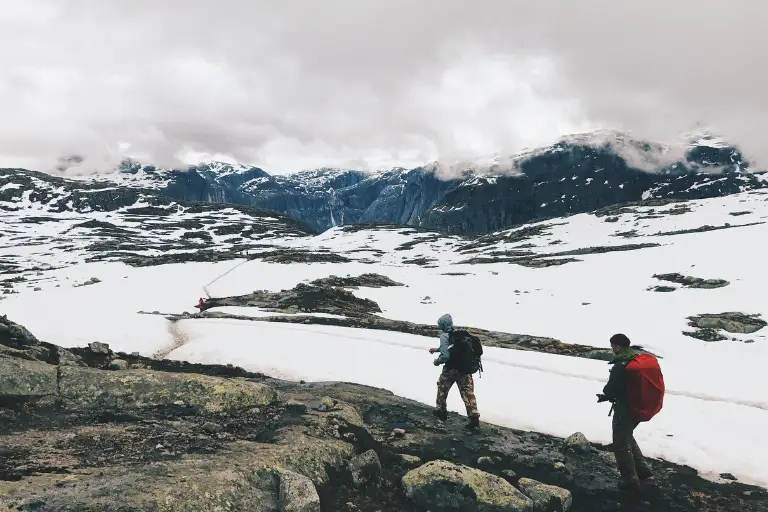
Mount Elbrus may be known as the highest point in Europe, but for me it has always been something more than a statistic on a map. I have climbed many peaks over the years, yet Elbrus has a different way of testing you and asking questions you did not know you needed to answer.
From far away, it sits there, calm and almost welcoming. But the closer you step, the more you feel its true nature, the wilderness, the cold that bites through every layer, its weather that can turn from generous to merciless in minutes.
Today I (Caroline Leon), want to talk to you, as a fellow mountaineer and share Elbrus not as a technical obstacle but as a companion you need to understand. In this guide, I will break it down as simply and honestly as I can. Because once you start to understand how this mountain thinks and breathes, you will find yourself moving with more confidence, more clarity, and maybe even more purpose.
The Mount Elbrus
Anyone who has spent time in the mountains knows that some peaks are simply elevations on a map, but others carry a presence that you feel long before you ever touch their snow. Mount Elbrus is one of those mountains for me.
Yes, it is the highest point in Europe. Yes, it is a massive, silent volcano that has slept for thousands of years. But those facts are only the surface. What stays with me is the way the mountain rises with two white crowns, the West Peak stretching to 5642 meters and the East Peak resting just a little lower at 5621 meters.
From a distance, Elbrus looks gentle, almost comforting. Wide glaciers, long snowfields, soft slopes. But the mountain changes as you climb. The snow becomes firm under your boots, the wind becomes strong, and the air is thin and unforgiving.
Elbrus has a quiet way of reminding you that beauty and danger can live in the same place. And this mountain does more than test your body. It asks you to look inward. To be patient. To respect the pace of nature rather than your own ego or schedule. No matter how strong you are, Elbrus will not let you rush.
The Routes
Mount Elbrus has several routes to the top, but two are most used by climbers: the South Route and the North Route. Each route has its own challenges and character. Here is what you need to know about the Mount Elbrus routes:
South Route
Climbing Mount Elbrus via the southern route is the most established and accessible way to reach the highest point in Europe, and it’s the side of the mountain I often recommend for a first Elbrus experience.I have climbed on this side of the mountain several times and its by far my favourite for several reasons, the great little town at the base filled with bars and restaurants and the cable car, that makes the decent a 20 minute journey. The climb begins in Cheper Azau, where a series of cable cars take you up to around 3,700 m, from the huts on the south side.
My favourite place to stay is the Leaprus Huts at 4,000m also called the Barrel Huts, the route follows a well-defined snow and ice track past the Pastukhov Rocks and up to the saddle between Elbrus’ two summits. Technically, the southern route is straightforward, with no major crevasse crossings if you stay on line, but it should never be underestimated. Summit day is long, cold, and often starts in the early hours, with altitude, wind, and rapidly changing weather playing a major role. What the south side offers is solid infrastructure and a clear route, but success still depends on fitness, patience, and the weather.
North Route
The North Route has always felt like a different world to me. It is quieter, more remote, and it carries that raw sense of adventure that first made many of us fall in love with the mountains. The climb begins far out in the Baksan Valley and slowly rises toward Lenz Rocks, where the landscape shifts into wide, cold glaciers.
There are huts but they are not busy, this side of the mountain is less commercial. It feels less like a climb and more like a true expedition, the kind that asks you to listen carefully to every change in the weather and to prepare for moments when the mountain tests your judgment.
Training and Preparation
You don’t just need strength to climb Mount Elbrus. The slopes are long and monotonous, so endurance matters more than short bursts of speed.
Climbers need to get used to high altitude. The summit is over 5,600 meters, and the air is thin up there. Rotating between base camp and higher huts before the final push helps your body adjust. Walking long days on snow and ice with a heavy pack is the best training. But if you do not have access to the mountains when training – try the step machine, add long 2hr step sessions that help you build that deep cardiovascular fitness.
Some basic technical skills are also important when it comes to climbing Mount Elbrus. You must be comfortable with crampons and an ice axe.
Preparation for climbing Mount Elbrus also includes gear. Warm clothing, double boots, and reliable equipment are not optional. Even if the weather looks calm, conditions can change quickly, and every item can make the difference between a safe climb and a dangerous situation.
Hazards Unique to Elbrus
Mount Elbrus has dangers that catch climbers off guard.
The wind can be brutal, and it can knock you off balance or freeze exposed skin on the higher slopes. Frostbite is real and can happen faster than most expect.
Crevasses are another hazard, especially on the North Route. Some are hidden under thin snow bridges. Glaciers move slowly, but they are always changing, and a path that was safe one week may be dangerous the next.
Conclusion
Most people think climbing Mount Elbrus is just about reaching the summit. But honestly? The mountain teaches you more before your boots even leave the base camp
The cold bites, the altitude hits harder than expected, and your mind questions every move. But showing up, day after day, rotating between huts, checking your gear, that is where confidence is built. That is where trust in yourself grows. The lessons from Mount Elbrus Expedition do not stay on the mountain. Discipline, patience, and respect spill into life off the slopes.
So, what are you waiting for? Start packing your bags for something that’s not just adventurous but transformative!