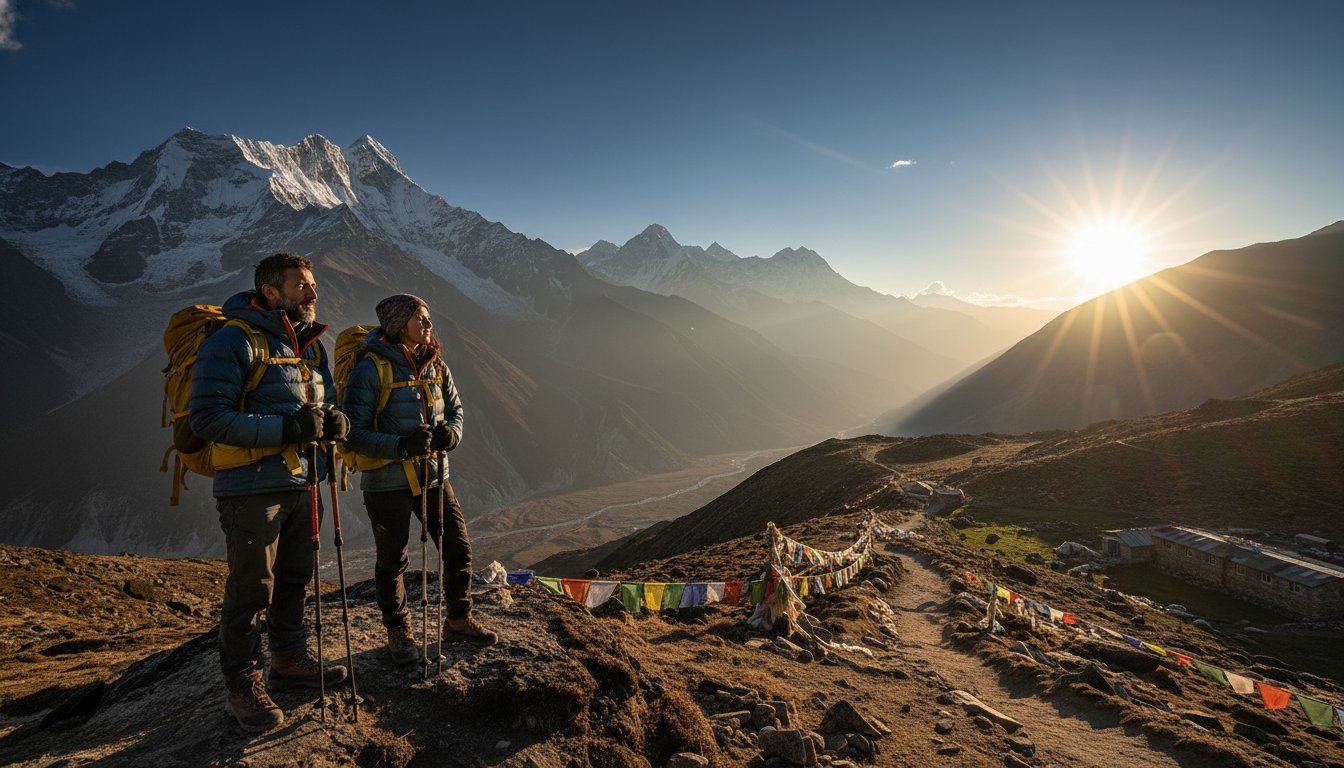
The most famous trail in the world might actually be the wrong choice for your first Himalayan expedition. When you’re sitting in a cafe in Dubai Marina planning your escape to the mountains, the choice between the annapurna circuit vs everest base camp feels like a toss-up between two legends. You likely worry about altitude sickness or fear that you’ll pick a trail that’s become too crowded to enjoy. I’ve spent over 1,000 days leading teams through these high passes, and I know that the right decision depends on whether you crave deep cultural immersion or the raw, jagged drama of the world’s highest peaks.
I’m going to give you an expedition leader’s honest breakdown to help you choose the path that fits your 2026 goals. We’ll look at how the Annapurna Circuit’s changing landscape affects the experience and how you can realistically train for a 5,416m (17,769ft) pass when your highest local training ground is Jebel Jais at 1,934m (6,345ft). You’ll walk away with a clear decision on your next destination, actionable training tips for life in the Gulf, and the truth about current trail conditions so you can step off the plane in Kathmandu with absolute confidence.
Key Takeaways
- Evaluate whether you crave the iconic prestige of the Khumbu or the deep cultural variety of the Annapurna region to ensure your first Himalayan expedition meets your personal goals.
- Compare the specific physical demands of the annapurna circuit vs everest base camp, specifically how sustained time above 4000m (13,123ft) impacts trekkers arriving from sea-level environments like the GCC.
- Master a realistic 12-week training protocol tailored for the “Dubai Dilemma,” helping you build genuine mountain fitness and “mountain lungs” without access to natural elevation.
- Get a clear-eyed look at 2026 logistics, including the truth about the Lukla flight and how to budget for the often-overlooked “hidden” costs of a high-altitude trek.
- Determine your ideal comfort level by comparing the high-end lodges of the Everest trail with the more rustic, authentic teahouse experiences found along the Annapurna circuit.
Annapurna Circuit vs Everest Base Camp: The High-Level Comparison
Choosing between these two legendary routes is the most frequent conversation I have with trekkers in Dubai. It is rarely a question of which trail is better; it’s a question of which story you want to tell. Everest Base Camp remains the undisputed king of iconography. There is a specific weight to standing at the foot of the world’s highest peak, a feeling that resonates deeply with the “bucket list” ambition. Annapurna, however, offers a different kind of reward. It is a journey through a living, breathing cultural corridor where the landscape shifts beneath your boots every single day.
The 2026 reality of trekking in Nepal looks different than it did a decade ago. Infrastructure has matured. In the Khumbu region, you will find high-speed internet and even luxury lodges at 3,860m (12,664ft). The Annapurna region has seen significant road expansion, which has changed the traditional circuit. Smart guides now use the New Annapurna Trekking Trails (NATT) to avoid the dust of the jeep tracks. Deciding between the annapurna circuit vs everest base camp requires understanding that EBC is a vertical mission into the heart of the high peaks, while Annapurna is a horizontal odyssey through diverse ecological zones. For those who find Nepal’s trails too crowded and crave a truly remote high-altitude challenge, the K2 base camp trek in the Karakoram offers an untamed wilderness experience that stands in stark contrast to both routes.
Trek Profiles at a Glance
- Everest Base Camp: 130km (80 miles) round trip. You will reach 5,364m (17,598ft) at base camp and 5,545m (18,192ft) if you climb Kala Patthar. Expect 6 to 7 walking hours daily.
- Annapurna Circuit: 160km to 230km (100-145 miles) depending on where you finish. The high point is Thorong La at 5,416m (17,769ft). Walking hours vary from 5 to 8 hours depending on the stage.
- The Vibe: The Khumbu feels like a high-altitude social club, especially in Namche Bazaar. Manang on the Annapurna side feels more ancient and spiritually grounded.
Which One Wins for Scenery?
Everest offers a relentless, high-alpine drama. From the moment you fly into Lukla, you are surrounded by 7,000m (22,965ft) and 8,000m (26,247ft) giants. It is a world of rock, ice, and sky. The view from Kala Patthar is arguably the most famous mountain vista on the planet, providing a direct line of sight to the Everest summit block.
Annapurna wins on variety. You start in lush, green forests with cascading waterfalls and end in a rain-shadow desert that looks like the surface of Mars. The transition is staggering. While you don’t get the same “constant” view of the highest peaks that you do on the way to EBC, the moment you crest Thorong La and see the Dhaulagiri range is a soul-stirring experience that rivals any view in the Khumbu. When comparing the annapurna circuit vs everest base camp, remember that EBC is about the destination, while Annapurna is about the transition.
Difficulty and Altitude: Which Trek is Physically Tougher?
When weighing up the annapurna circuit vs everest base camp, you aren’t just comparing distances; you’re comparing two distinct types of physical suffering. Everest is a slow, cold burn. It’s a journey defined by sustained exposure to high altitude, where the air stays thin for days on end. Annapurna, conversely, feels like a long, scenic walk that suddenly turns into a high-stakes mountaineering challenge as you approach the Thorong La Pass. Both require grit, but they’ll test your body in different ways.
The “Khumbu Cough” is a real factor on the Everest route. The combination of dry, freezing air and dust from the glacial moraine can irritate your lungs, making every breath at 5000m (16,404ft) feel like a struggle. Annapurna is generally lower and more humid in the early stages, which is easier on the respiratory system, but the “Thorong La Grind” is a brutal single-day push. You’ll climb 1000m (3,280ft) in the dark and then descend 1600m (5,249ft) in one afternoon. It’s a massive shock to the system that requires serious leg strength and mental resolve.
The Altitude Factor
Everest Base Camp is statistically riskier regarding Acute Mountain Sickness (AMS) because you spend more time above the 4000m (13,123ft) threshold. For adventurers flying in from Dubai or Riyadh, your body needs time to produce more red blood cells. EBC requires a strict acclimatisation schedule with multiple “rest” days where you hike high and sleep low. You can learn more about this in my guide on High Altitude Acclimatisation. On the Annapurna Circuit, the ascent is more gradual, but the peak altitude at the pass is 5416m (17,769ft). This is higher than EBC, making that single day the most physically demanding of either trek.
Daily Physical Demands
The terrain varies significantly between the two regions. Everest involves navigating unstable glacial moraine and steep, rocky inclines. Annapurna is famous for its thousands of stone steps, which can be punishing on the joints. I’ve noticed a few common mistakes that trekkers make:
- Overpacking: Carrying more than 10kg in your daypack will destroy your knees on those 1600m (5,249ft) descents.
- Ignoring the Cold: Sub-zero temperatures at night drain your energy reserves. If you don’t sleep well because you’re cold, you won’t recover for the next day.
- Dehydration: In the dry Himalayan air, you need to drink at least 4 litres of water daily to help your blood flow at altitude.
Field Note: Don’t underestimate the psychological challenge of the “out-and-back” route on Everest. Walking the same path back to Lukla when you’re exhausted can feel tedious. The Annapurna “loop” provides a constant sense of discovery, which often helps trekkers push through the fatigue. If you want to see what the terrain actually looks like before you commit, have a look at my expedition videos at @CarolineLeon.

Culture, Comfort, and Crowds: The Trekker’s Experience
When you’re weighing up the annapurna circuit vs everest base camp, the decision often comes down to what you want to see when you unzip your sleeping bag each morning. Everest is the prestige trek. It offers a structured, almost commercialised efficiency. The teahouses in the Khumbu region have evolved into “luxury” mountain lodges where you might find electric blankets and en-suite bathrooms even at 4000m (13,123ft). Annapurna remains more rustic. It retains a homely charm where the dining room stove, fuelled by dried yak dung or wood, is the undisputed social heart of the lodge.
The cultural textures differ wildly between the two. Everest is the Sherpa heartland. You’ll walk past ancient Mani stones and beneath the watchful eyes of the Buddha at Tengboche Monastery. Annapurna offers a broader melting pot. You start in Hindu subtropical lowlands and climb through Gurung and Magar villages before reaching the Tibetan-influenced Buddhist highlands of Manang. It’s a cultural transition that feels like walking through a living museum.
For the 2026 season, the “human snake” on the EBC trail remains a reality during the October peak. To avoid the bottlenecks, I advise my teams to start their trekking days at 05:30. This puts you ahead of the main bubble of trekkers. In Annapurna, the experience has changed. While many complain about the new road, my field notes show it has actually made the “true” trekking sections quieter. Most tourists now take jeeps to higher altitudes, leaving the New Annapurna Trekking Trails (NATT) remarkably peaceful for those willing to walk the old ways. Adventurers who find even these quieter sections too well-trodden may want to consider the K2 base camp trek across the Baltoro Glacier, where true wilderness silence is still the norm rather than the exception.
Food and Accommodation
You’ll quickly learn that “Dal Bhat power” is real. While both regions serve this lentil and rice staple, Annapurna’s lower elevation allows for more varied menus, including fresh vegetables grown in local gardens. In Everest, almost everything is carried up by porters or yaks, making food significantly more expensive. Staying in touch with the office in Dubai is easier now than ever. EverestLink provides decent Wi-Fi throughout the Khumbu, though it comes at a premium cost. Annapurna has better mobile data coverage, but expect to pay for hot showers and battery charging in both regions as you climb higher.
The Impact of Modernity
Modernity has touched both trails differently. On the Annapurna Circuit, the road is a double-edged sword. To enjoy the trek, you must use the NATT markers to avoid walking on the dusty jeep tracks. It requires better navigation but rewards you with untouched forest paths. In the Everest region, the “helicopter culture” is the main shift. The constant hum of rotors provides a safety net for evacuations, but it certainly erodes the wilderness feel. If you value silence, the higher reaches of the annapurna circuit vs everest base camp will likely suit you better, provided you step off the main road and onto the heritage trails.
Training in the Middle East: Preparing from Sea Level
Living in Dubai presents what I call the ‘Dubai Dilemma’. You are training at sea level, often in 40°C humidity, for an environment that eventually drops to -15°C at altitudes like 5,416m (17,769ft). When weighing up the annapurna circuit vs everest base camp, your physical preparation remains remarkably similar. You need a mix of aerobic capacity and the leg strength to descend 1,000m (3,280ft) in a single afternoon without your knees buckling.
I recommend a 12-week training protocol. During weeks 1 to 4, focus on building a base with three weekly 45-minute zone 2 cardio sessions. By week 8, you should be hiking with a 10kg pack for at least 4 hours. By week 12, back-to-back long days are essential to simulate the repetitive strain of the Himalayas. Heat training in the UAE actually helps by increasing your blood plasma volume, which aids circulation. However, it doesn’t prepare you for the thermal shock. Moving from the desert to the Khumbu is a 50-degree swing; you must practice your layering system before you land in Lukla.
Training at Jebel Hafeet or Mushrif Park is your best local secret weapon. The repetitive incline of Hafeet builds the specific calf and glute strength required for the Thorong La Pass. Meanwhile, the stairs at Mushrif Park allow for high-intensity vertical intervals that mimic the steep stone steps common on the trail to Everest. GCC-based adventurers who want to progress beyond trekking into genuine high-altitude mountaineering may also find it valuable to climb Mount Kenya as a technical stepping stone before tackling the Himalayas, as its jagged peaks at 4,985m (16,355ft) offer an ideal introduction to vertical rock and thin air.
Local Training Spots
- The ‘Stairway to Heaven’ (Ras Al Khaimah): This is the closest you will get to Himalayan terrain in the UAE. It offers the steep, technical rock work needed for the annapurna circuit vs everest base camp comparison, especially the rocky sections near Gorak Shep.
- Sand dune hiking in Al Qudra: Hiking in soft sand is a brilliant way to build the stabiliser muscles in your ankles and knees. It prepares you for the shifting scree and uneven paths of the high passes.
- Indoor training: Use the altitude chambers available in Dubai gyms. Spending 60 minutes twice a week at a simulated 3,000m (9,842ft) helps your body adapt to lower oxygen levels before you leave the GCC.
Gear Selection for GCC Residents
Your desert hiking gear will not work in the Himalayas. Breathable wicking shirts are fine for the first two days, but they offer no protection against the biting winds of the high alpine. You must invest in the ‘Big Three’: B1 or B2 rated trekking boots, a high-fill power down jacket, and a four-season sleeping bag rated to at least -15°C. These are your life support systems. For a deep dive into what actually survives the trail, you can follow Caroline Leon on YouTube for field-tested gear reviews.
Preparation is the difference between a miserable slog and a transformative journey. If you want to ensure your fitness and gear are mountain-ready, book a pre-expedition consultation to refine your strategy.
Making the Final Choice: Logistics and Booking
Deciding between the annapurna circuit vs everest base camp often comes down to what you want to feel when you return to the heat of the Gulf. If you want the prestige of standing at the foot of the world’s highest peak, Everest is your calling. If you want a deep dive into changing landscapes and a more circular, evolving journey, Annapurna wins. In 2026, both routes require more than just physical fitness; they require a solid grasp of the changing logistics in Nepal. I’ve seen many trekkers arrive in Kathmandu unprepared for the small details that can derail an expedition, like the lack of physical cash for mountain permits or the weight limits on the Lukla flights.
Logistics from the Gulf
Flying from Dubai (DXB) or Doha (DOH) to Kathmandu (KTM) is straightforward. flydubai, Qatar Airways, and Air Arabia offer regular connections that get you into the capital in under five hours. Most UAE and GCC residents can obtain a visa on arrival, which currently costs $50 USD for a 30-day stay. You’ll need crisp US Dollar bills for this. If you choose Everest, the flight to Lukla is your first big hurdle. These flights are notoriously weather-dependent. I always build at least two buffer days into our itineraries to account for mountain fog. For Annapurna, you’ll likely drive 7 to 9 hours to Besisahar or take a short flight to Pokhara. The road is bumpy, but it’s far more reliable than the Khumbu weather.
Budgeting for 2026 needs to be realistic. A high-quality, fully supported trek will cost between $2,500 and $4,000 USD. Beyond the package price, keep $500 USD aside for “hidden” costs. On the mountain, a hot shower can cost $5 USD, and charging a camera battery at 4,000m (13,123ft) often costs $3 USD. These small expenses add up over 14 days.
Join a Summit Expedition
We don’t just book teahouses; we manage the entire transition from the desert to the high Himalaya. Our team understands the specific needs of Middle East-based adventurers, from acclimatisation schedules that respect your sea-level origins to the cultural nuances of the trail. We combine Oman-based leadership with the incomparable skill of local Sherpas. This dual layer of support ensures you aren’t just a tourist, but a member of a safe, professional expedition. A guide is non-negotiable for 2026. They are your early warning system for altitude sickness and your bridge to the local communities.
Ready to stand amongst the giants? Book your 2026 Everest Base Camp or Annapurna Circuit Trek with Summit Expeditions and let us handle the details while you focus on the climb.
Choosing Your Himalayan Path for 2026
Deciding between the annapurna circuit vs everest base camp isn’t just about picking a trail on a map. It’s about what you want to feel when you’re standing more than 5,000m (16,404ft) above sea level. If you’re chasing the legendary status of the world’s highest peak and don’t mind the social buzz of the Khumbu, Everest is your mark. For those who want diverse landscapes that shift from subtropical forests to the high alpine desert of the Thorong La Pass at 5,416m (17,769ft), Annapurna offers a more varied rhythm.
I’ve led teams across these ranges for years. I know that for my fellow adventurers in Dubai, the real challenge starts with training at sea level. You’ve got to focus on weighted step-ups and heat acclimatisation before you ever touch down in Kathmandu. At Summit Expeditions, we handle the complex logistics for Middle East travellers so you can focus on your breath and your boots. I’m a world-record holder who’s lived these routes, and our team maintains a 100% safety record on all high-altitude treks. We’re here to ensure you’re prepared for every rocky step.
Start your Himalayan journey with Summit Expeditions. The mountains are waiting for you to make your move.
Frequently Asked Questions
Is the Annapurna Circuit or Everest Base Camp better for beginners?
Everest Base Camp is generally the better choice for beginners because the infrastructure of tea houses and rescue services is more robust. While both treks require solid fitness, EBC follows a well-trodden path with clearer markers. However, the Annapurna Circuit offers a more gradual ascent through diverse climates. If you’re comparing annapurna circuit vs everest base camp for your first trip, EBC provides a more predictable logistical framework for those new to high altitudes.
How much does the Everest Base Camp trek cost in 2026?
You should budget between $1,800 and $4,500 USD for a high-quality Everest Base Camp trek in 2026. This range accounts for the 15% increase in permit fees and local porter wages seen since 2024. Your total spend includes return flights from Kathmandu to Lukla, which now average $400 USD; daily expenses for food and lodging; and professional guide fees. Luxury lodge options will push your daily budget significantly higher.
What is the best month for trekking in Nepal if travelling from Dubai?
October and November are the gold standard months for trekking because they offer the clearest skies and most stable temperatures after the monsoon. For those flying from Dubai, these months provide a perfect escape from the lingering UAE heat. April and May are the second best options, though you’ll encounter more haze. During October, daytime temperatures at 3,500m (11,482ft) typically hover around 12°C, providing ideal conditions for long hiking days.
Can I do the Annapurna Circuit without a guide in 2026?
No, you cannot trek the Annapurna Circuit without a licensed guide in 2026. The Nepal Tourism Board implemented a mandatory guide policy for all foreign trekkers in April 2023 to improve safety and support the local economy. This regulation applies to all national park areas, including the Annapurna region. Hiring a guide adds roughly $30 to $50 USD per day to your budget but ensures you navigate the changing trail conditions safely.
How do I prevent altitude sickness if I live at sea level in the UAE?
You prevent altitude sickness by following a strict “climb high, sleep low” protocol and maintaining a slow, steady pace. Since Dubai sits at sea level, your body needs extra time to produce red blood cells. I recommend spending at least two nights at 3,440m (11,286ft) in Namche Bazaar. Drink 4 to 5 litres of water daily and avoid caffeine or alcohol. Most of my clients find that a 14-day itinerary is the minimum required for safe acclimatisation.
Is the Annapurna Circuit road-spoilt now?
While road construction has reached Manang, the Annapurna Circuit isn’t spoilt if you use the New Annapurna Trekking Trails (NATT). These marked paths allow you to bypass 85% of the dusty jeep tracks. You’ll still experience the remote wilderness and traditional villages that made this trek famous in the 1970s. The presence of the road has actually improved safety by allowing for faster emergency evacuations in the lower valley sections.
What is the hardest part of the Everest Base Camp trek?
The hardest part of the trek is the pre-dawn ascent of Kala Patthar at 5,545m (18,192ft). While Base Camp itself is the goal, this peak offers the actual view of Everest’s summit and requires significant mental grit. Oxygen levels here are 50% lower than at sea level. You’ll likely face temperatures as low as -15°C. It’s a slow, grinding climb that tests your physical preparation and your ability to manage extreme cold.
How many days do I need for the Annapurna Circuit vs EBC?
You need 12 to 14 days for a standard Everest Base Camp trek, while the full Annapurna Circuit typically requires 14 to 18 days. The annapurna circuit vs everest base camp duration depends on whether you take transport for the final sections of the Annapurna route. For EBC, the 12-day timeframe includes two mandatory acclimatisation days. I always suggest adding two buffer days to your international flight schedule to account for Lukla flight delays.