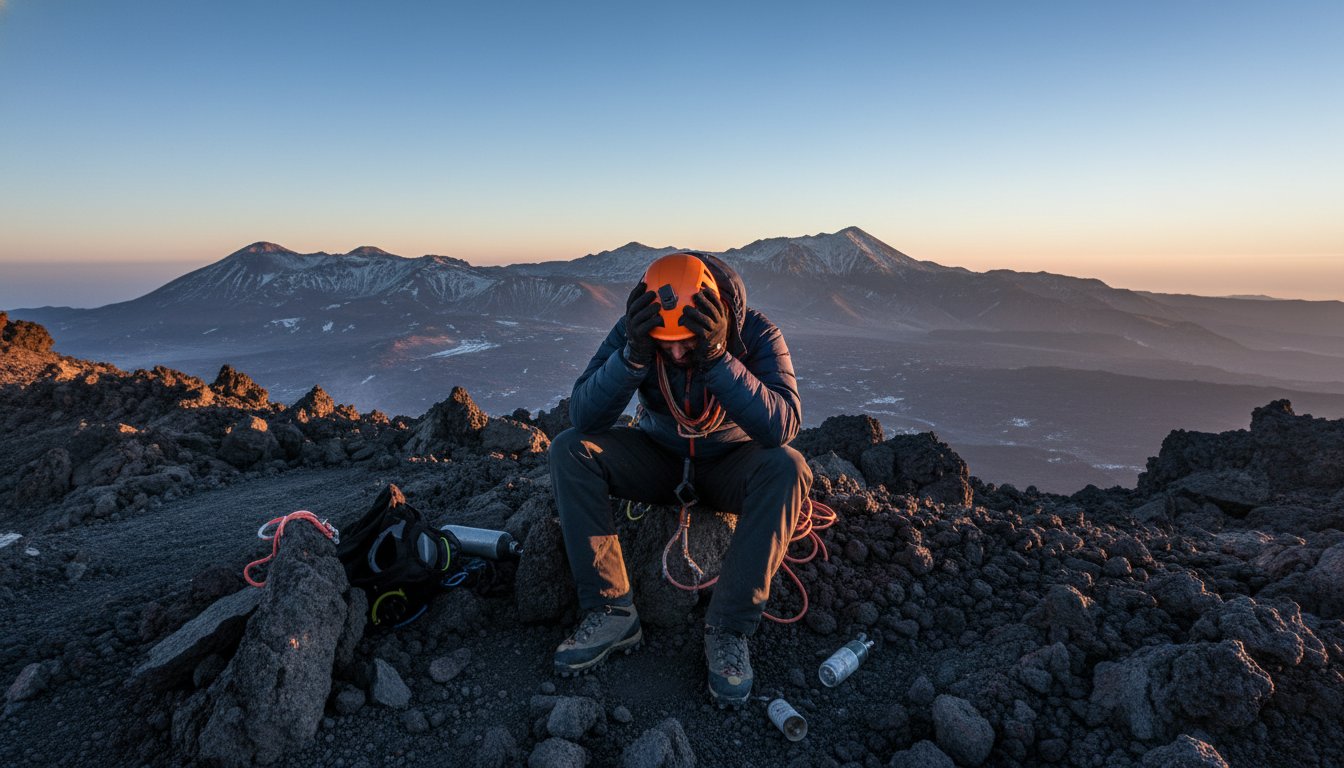
Last July, while leading a team of UAE-based trekkers through the Barranco Wall at 3,960m (12,992ft), I watched a seasoned Dubai triathlete struggle to remember his own phone number. He dismissed it as just a bit of sun, but as an expedition leader, I knew the subtle shifts in his personality were early altitude sickness symptoms that demanded immediate action. We often feel a deep-seated worry when we swap the Arabian Gulf’s sea-level oxygen for the thin air of the peaks, wondering if our bodies will betray us at the final hurdle.
I understand that nagging fear of being the one forced to turn back, especially when you don’t have a mountain in your backyard to practice on. This guide draws on my 12 years of high-altitude experience to help you accurately monitor your health and manage your ascent with confidence. You’ll learn to identify the exact red flags that require a descent and discover practical acclimatisation tips specifically designed for climbers departing from the Middle East. We will break down the essential checklist of symptoms and provide the field-tested strategies you need to reach the summit safely.
Key Takeaways
- Understand why living at absolute sea level in the GCC puts you at a unique physiological disadvantage when ascending above 2500m (8,202ft) and how to manage that transition.
- Master the “headache plus one” rule to accurately identify early altitude sickness symptoms before they escalate into more serious conditions like HAPE or HACE.
- Learn to distinguish between expected trekking fatigue and dangerous illness using a field-tested mental checklist designed for your mountain rest breaks.
- Discover why the “Pole Pole” (slowly, slowly) philosophy is your most vital tool for success and how to adapt your hydration for thin, dry air.
- Gain insight into how professional guides use daily health checks to monitor the specific physiological needs of climbers departing from the Middle East.
What is Altitude Sickness and Why Does it Hit GCC Climbers?
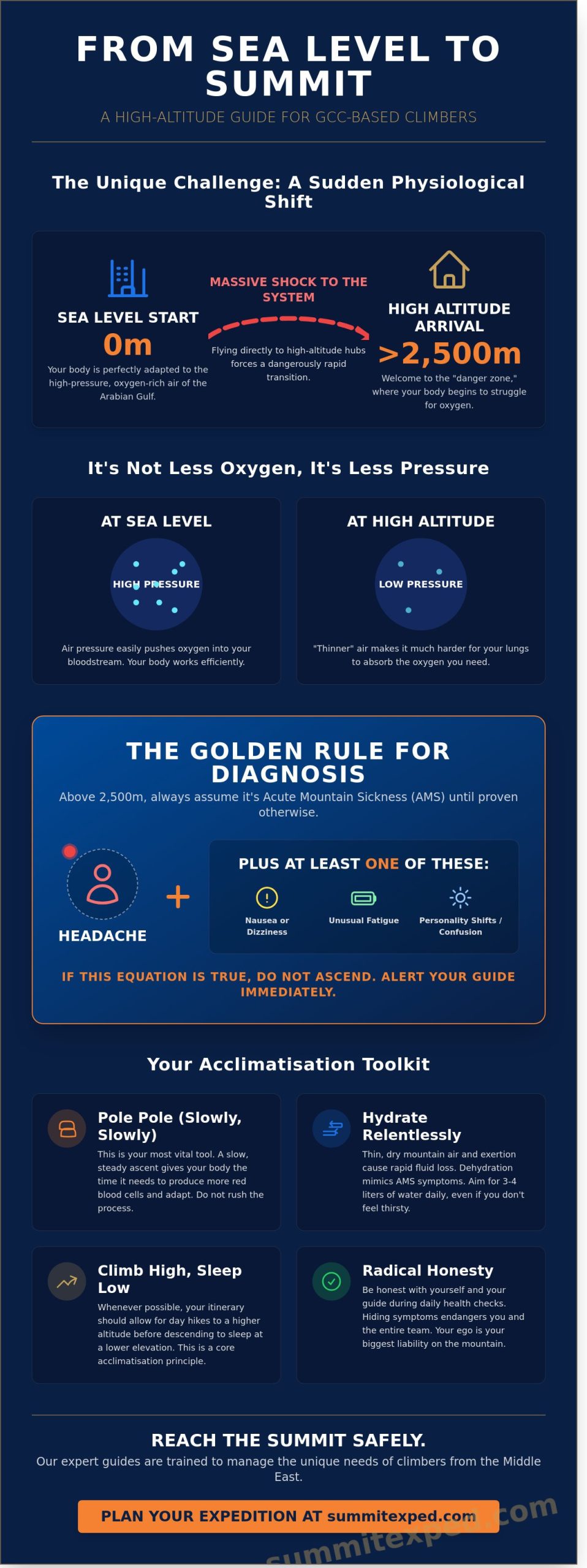
Living in Dubai or Doha means our bodies are perfectly calibrated for life at sea level. We spend our days in high-pressure, oxygen-rich environments, often moving between climate-controlled spaces and the intense desert heat. When we trade the Arabian Gulf for the thin air of the Himalayas or the Andes, we’re asking our physiology to perform a radical U-turn. Understanding What is Altitude Sickness? is the first step in ensuring your expedition doesn’t end before you reach the top. At its core, it’s the body’s physical struggle to adapt to lower oxygen levels at elevations above 2500m (8,202ft).
The science isn’t actually about a lack of oxygen in the air; the percentage of oxygen remains at 21% even on the summit of Everest. The real culprit is atmospheric pressure. As we climb higher, the air becomes “thinner,” meaning the molecules are spread further apart. This drop in pressure makes it significantly harder for your lungs to force oxygen into your bloodstream. I’ve seen elite athletes, people who spend ten hours a week in the gym, struggle with altitude sickness symptoms while casual hikers move steadily upward. Your VO2 max or your marathon PB won’t act as a shield here. The mountain doesn’t care about your fitness; it only cares about your biology’s ability to adapt.
To better understand this concept, watch this helpful video:
The 2500m (8,202ft) Threshold
Most climbers don’t feel the shift immediately. For the vast majority of people, the physiological alarm bells only start ringing once they cross the 2500m (8,202ft) mark. This is the point where the drop in pressure becomes too great for the body to ignore. Altitude sickness occurs when the rate of ascent outpaces the body’s ability to increase red blood cell production and adjust its pH balance. If you rush this process, especially during the first 48 hours of an expedition, you’re essentially forcing your organs to operate on a fuel shortage. This is why we preach the philosophy of pole pole, or slowly, slowly; your body needs time to manufacture the biological tools required to survive in the clouds.
From the Desert to the Peak
GCC-based adventurers face a unique logistical hurdle. Many of us fly directly from a city at 0m altitude to high-altitude hubs like Lukla in Nepal, which sits at 2860m (9,383ft). You’re effectively jumping from sea level to the “danger zone” in a matter of hours. This sudden transition is a massive shock to the system. Additionally, the dry desert climate we live in can be deceptive. We’re used to being slightly dehydrated, but on a mountain, that’s a recipe for disaster. Dehydration often mimics early altitude sickness symptoms, like headaches and lethargy, which can lead to confusion and poor decision-making. For Middle East climbers, a more conservative acclimatisation schedule isn’t just a recommendation; it’s a safety requirement. You can find more advice on preparing your body for these shifts at caroline-leon.com.
Recognising the Spectrum: Altitude Sickness Symptoms
Understanding Recognising the Spectrum of Altitude Sickness isn’t just about reading a manual. It’s about radical honesty with yourself and your team. On the mountain, your ego is often your biggest liability. If you’re climbing above 2500m (8,202ft), you must live by the “headache plus one” rule. This is the simplest way to diagnose the early onset of Acute Mountain Sickness (AMS). If you have a headache and just one other symptom, such as nausea or unusual fatigue, you have AMS until proven otherwise. Don’t overcomplicate it by blaming the sun or a heavy pack.
You’ll often find that altitude sickness symptoms feel significantly worse at night. I’ve spent many nights at 4000m (13,123ft) listening to the breathing patterns of my team. When you sleep, your breathing rate naturally slows down. This is called nocturnal hypoventilation. Because you’re taking in less oxygen while you rest, your blood oxygen levels dip, often triggering a throbbing headache or a sense of suffocating that wakes you up. It’s a physiological hurdle that every mountaineer must manage through proper acclimatisation.
Beyond the physical, watch for the “hidden” psychological shifts. Irritability, poor judgement, or a sudden lack of interest in the surroundings are massive red flags. If a teammate who is usually talkative becomes unusually quiet or begins acting out of character, their brain is likely struggling with the thinning air. It’s a subtle insight that only comes from spending time in the high country, but it’s often the first sign that someone needs to stop ascending.
AMS: The Common Struggle
Think of mild AMS as a “mountain hangover.” It’s that dull, persistent pressure behind the eyes that won’t shift. The primary symptoms include a loss of appetite, nausea, and a dizzy sensation when you stand up too quickly. It’s easy to confuse this with simple exhaustion after a long day on the trail. However, true fatigue usually disappears after a 30-minute rest and some hydration. If you’ve rested, eaten, and still feel like rubbish, you’re dealing with the start of sickness. I always tell my climbers that if you can’t face your favourite snack, something is wrong.
HAPE and HACE: The Critical Red Flags
When symptoms progress beyond a hangover feeling, you’re entering dangerous territory. High Altitude Pulmonary Oedema (HAPE) is essentially fluid in the lungs. You’ll notice a persistent, dry cough and extreme breathlessness that doesn’t go away even when you’re sitting still. High Altitude Cerebral Oedema (HACE) is even more severe, involving brain swelling. The hallmark sign is ataxia, which is a “drunk-like” stumbling. If you see someone struggling to walk a straight line or appearing confused, they need to descend immediately. These aren’t challenges to push through; they are signals to go down. If you want to refine your mountain safety skills, looking into our training resources can help you prepare for these high-stakes environments.
Normal Discomfort vs. Dangerous Sickness
I’ve stood at the base of many peaks where climbers from Dubai or Doha try to power through the first signs of trouble. The most common excuse I hear is, “I’m just tired from the flight,” or “It’s just a bit of heat fatigue.” In the mountains, your ego is your biggest liability. We must distinguish between the body adapting and the body failing. Understanding Normal Discomfort vs. Dangerous Sickness is vital for every member of the team. It starts with a simple honesty policy. If you hide your altitude sickness symptoms from your guides or teammates, you aren’t being tough; you’re becoming a risk to the entire expedition.
During every rest break, I want you to run through a mental checklist. Ask yourself three questions. First, do I have a headache that persists even after drinking a litre of water? Second, can I eat a snack, or does the thought of food make me nauseous? Third, am I unusually breathless while standing still? If the answer to any of these is yes, you need to speak up immediately. We don’t stop the climb because you’re tired, but we do stop when the tiredness is a mask for something more clinical.
The ‘Normal’ Mountain Feeling
Acclimatisation isn’t a passive process. It’s an active physiological struggle. Expect to feel a slight increase in respiratory rate and a mild, transient headache as your body naturally adjusts to the reduced pressure above 3000m (9,842ft). This is what high altitude acclimatisation feels like when it’s working. You might feel a bit lightheaded when you stand up quickly, but this should resolve within minutes of resting and hydrating. Your heart rate will be higher than it is at sea level in the GCC, even while you’re tucked into your sleeping bag at night. These are signs your body is producing more red blood cells to carry oxygen. It’s uncomfortable, but it’s manageable.
When to Call It: The No-Go Zones
The line between discomfort and danger is crossed when symptoms stop responding to basic care. If a headache doesn’t budge after taking simple painkillers like paracetamol or ibuprofen, that’s a red flag. I often see climbers try to mask their altitude sickness symptoms with heavy medication just to keep ascending. This is a recipe for disaster. Using drugs to hide a worsening condition only leads to High Altitude Cerebral Edema (HACE) further up the trail.
If you find yourself stumbling, confused, or unable to keep up a basic pace, the conversation is over. There is only one reliable cure for worsening symptoms: descent. Dropping just 500m (1,640ft) can often provide immediate relief and prevent a medical emergency. We climb “pole pole” (slowly, slowly) to avoid this, but we never gamble with the mountain’s rules. Your safety is the only metric that matters.
Prevention and Response: The Leader’s Protocol
Speed is your greatest enemy on the mountain. In East Africa, we call the solution “Pole Pole,” which translates to slowly, slowly. It is the golden rule I live by when leading expeditions. When you move too fast, your body simply doesn’t have the time it needs to adjust to the thinning air. Your heart rate spikes, your breathing becomes inefficient, and you’re essentially inviting altitude sickness symptoms to take hold before you’ve even reached the high camps. I’ve seen elite athletes from Dubai crumble because they treated the ascent like a sprint rather than a slow, physiological negotiation.
For those of us living in the GCC, hydration is a specific challenge that requires a shift in mindset. We’re used to the heavy, humid air of the coast where you feel the sweat on your skin. In the mountains, the air is incredibly dry. You lose a massive amount of moisture just by breathing. I tell my climbers to aim for 4 to 5 litres of water a day. If your urine isn’t clear, you aren’t drinking enough. Dehydration thickens your blood, making it even harder for oxygen to reach your brain and muscles.
We also follow the “Climb High, Sleep Low” rule. This means we might trek up to 4600m (15,091ft) during the day but drop back down to 3900m (12,795ft) to sleep. This stress and recovery cycle triggers your body to produce more red blood cells without the constant strain of thin air overnight. Your fitness for mountaineering is vital here. Being fit won’t stop you from getting sick, but it means your body recovers much faster after a hard day of trekking. A fit heart handles the lack of oxygen with less panic, keeping your systems stable.
Practical Prevention Strategies
Fuel is everything. At altitude, your body struggles to process fats and proteins, so I prioritise carbohydrates. They require less oxygen to metabolise. About 70 to 80 percent of your calories should come from complex carbs. Regarding Diamox or other aids, I always insist you speak with a doctor before leaving the UAE. Finally, check your mountaineering gear list. Staying warm is crucial; hypothermia mimics and worsens altitude sickness symptoms, making it harder for your body to cope with the climb.
Immediate Response in the Field
If a symptom appears, we stop. We don’t push through. We assess the severity immediately using a “Stop and Assess” protocol. If we suspect HAPE or HACE, the response is non-negotiable: immediate, assisted descent. We use pulse oximeters to monitor blood oxygen levels. For a sea-level resident, a reading of 95 percent is normal. At 5000m (16,404ft), we might see 75 percent or 80 percent. It’s not just the number that matters, but how that number trends over time and how you feel alongside it.
Ready to start your journey? Join me for an expedition and let’s tackle the peaks together.
Safe Summits with Summit Expeditions
Living at sea level in Dubai or across the GCC means your body is perfectly adapted to high oxygen environments and intense heat. When you suddenly swap the desert for a ridge at 4000m (13,123ft), the physiological shift is massive. I’ve spent years leading teams from the Middle East, and I’ve learned that success isn’t just about fitness; it’s about how we manage that transition. We don’t just hope you feel okay. We use a structured system to monitor your health every single day. Our guides are trained to spot the early altitude sickness symptoms that climbers from the desert often miss, using twice-daily health logs that track your oxygen saturation and heart rate.
We see safety as our primary summit. Getting to the top is optional, but getting back down to your family in the UAE or Riyadh is mandatory. This mindset is what keeps our teams strong. We understand that a climber coming from a Dubai summer needs a different acclimatisation pace than someone living in the Alps. We don’t rush. We follow the “pole pole” philosophy, ensuring your body has the time it needs to produce those essential red blood cells. It’s a pragmatic, experience-based approach that prioritises your long-term health over a single photo at the peak.
Our Safety Standards
We don’t leave your well-being to chance. Every expedition I lead carries comprehensive medical kits and emergency oxygen cylinders, regardless of the peak’s height. We maintain small group sizes, usually capped at 12 climbers, to ensure every person receives individual attention from our lead guides. This allows us to notice subtle changes in your appetite or sleep patterns before they become serious issues. To see how these protocols look on the mountain, you can watch Caroline Leon’s journey on YouTube to see our safety protocols in action. These standards are what allow us to maintain a high success rate while keeping risk to an absolute minimum.
Planning Your Next Adventure
Your next big milestone is closer than you think. Whether you want to climb Mount Kilimanjaro at 5895m (19,341ft) or you’re ready to trek towards the base of Everest, we guide you through every step of the preparation. We offer personal consultations in Dubai to discuss your specific goals, gear requirements, and training schedules. For those who want to dive deeper into the reality of life at 8000m (26,247ft), follow the Caroline Leon website for more subtle insights from the world’s highest peaks. Let’s start planning your 2026 expedition with the right balance of ambition and expert care.
Your Path to the Peak Starts with Preparation
Mountaineering isn’t about ignoring your body; it’s about listening to it with more precision than you do at sea level. Living in the GCC means we often start our journeys from just a few metres above the waves. When you suddenly find yourself standing at 4000m (13,123ft), recognising altitude sickness symptoms early isn’t just a skill, it’s a non-negotiable survival requirement. I’ve seen many climbers try to push through a mounting headache only to find themselves forced down before the summit. It’s why Nadhir Al Harthy and I have spent years refining our specialised protocols specifically for climbers based in the Middle East. We focus 100% on safety and authentic mountain experiences, ensuring you don’t just reach the top, but you do it with your health intact. You don’t need to fear the altitude, but you must respect the physiological shift. We prioritise slow acclimatisation and constant health monitoring so you can experience the transformative power of the wilderness without unnecessary risk. The wild is waiting, and with the right leadership, those high-altitude milestones are within your reach.
Start your safe journey to the summit with our expert-led expeditions
Frequently Asked Questions
Is a headache at altitude always a sign of altitude sickness?
No, a headache isn’t always a definitive sign, but on the mountain, we treat every headache as altitude sickness until we’ve ruled out dehydration or heat exhaustion. You’ll often find that drinking a litre of water and resting for 30 minutes resolves a simple tension headache. However, if the pain persists after hydrating, it’s a clear indicator of Acute Mountain Sickness. Never ignore it; monitor your body’s response closely as you climb higher.
Can I prevent altitude sickness if I am extremely fit?
Physical fitness doesn’t protect you from altitude sickness, and being a marathon runner won’t change how your blood chemistry adapts to lower oxygen levels. In my experience, the fittest climbers are often at higher risk because they tend to push too fast. Success depends on acclimatisation, not aerobic capacity. Stick to the pole pole pace, which means walking slowly enough to hold a full conversation without gasping for air or feeling any physical strain.
What should I do if I start feeling nauseous on the trail?
Stop moving immediately and tell your lead guide if you feel nauseous. Nausea is one of the primary altitude sickness symptoms that signals your body is struggling to cope with the current elevation. We usually advise resting for 60 minutes to see if the feeling passes. If you vomit or the nausea intensifies while stationary, it’s a non-negotiable signal that you need to descend at least 500m (1,640ft) to recover safely.
How long do altitude sickness symptoms typically last?
Mild symptoms typically resolve within 24 to 48 hours if you remain at the same altitude to acclimatise. If you choose to descend 1,000m (3,280ft), you’ll often feel significantly better within 2 to 4 hours as the air pressure increases. However, if you continue to ascend while symptomatic, the condition will worsen rapidly. Recovery is about giving your body the time it needs to produce more red blood cells to carry oxygen.
Is it safe to sleep if I have a mild headache at altitude?
You can sleep with a mild headache, provided it responds to a standard 400mg dose of ibuprofen and isn’t accompanied by ataxia or confusion. Sleep is when your body does its best acclimatisation work, but your tent mate should check on you. If you wake up with a pounding throb or feel breathless while resting, these are worsening altitude sickness symptoms. In these cases, you must notify the medical lead immediately rather than waiting for morning.
Can children or elderly climbers get altitude sickness?
Everyone is susceptible to altitude sickness, regardless of age, and children actually face a higher risk because they can’t always communicate how they feel. Statistics from high-altitude rescues show that climbers over 60 years old don’t have higher AMS rates than 20-year-olds, but they may have slower recovery times. For any climber under 12 or over 65, we implement a much stricter hydration and ascent protocol to ensure their safety throughout the entire expedition.
What is the fastest way to get rid of altitude sickness?
Descending to a lower elevation is the only instant cure for altitude sickness. While bottled oxygen or medications like Diamox can mask the issues, dropping 500m (1,640ft) to 1,000m (3,280ft) provides immediate relief by increasing the oxygen saturation in your blood. I’ve seen climbers go from being completely incapacitated to laughing and eating a meal just two hours after moving to a lower camp. It’s the most effective tool in our safety kit for every climber.
Does drinking more water prevent altitude sickness?
Drinking water doesn’t prevent altitude sickness, but staying hydrated prevents dehydration, which often mimics or exacerbates the problem. You should aim for 4 litres of fluids daily to help your kidneys process the bicarbonate needed for acclimatisation. Over-hydrating by drinking more than 6 litres can actually be dangerous, leading to hyponatremia. It’s a delicate balance; drink enough so your urine stays clear, but don’t force fluids if you aren’t thirsty or feel bloated.