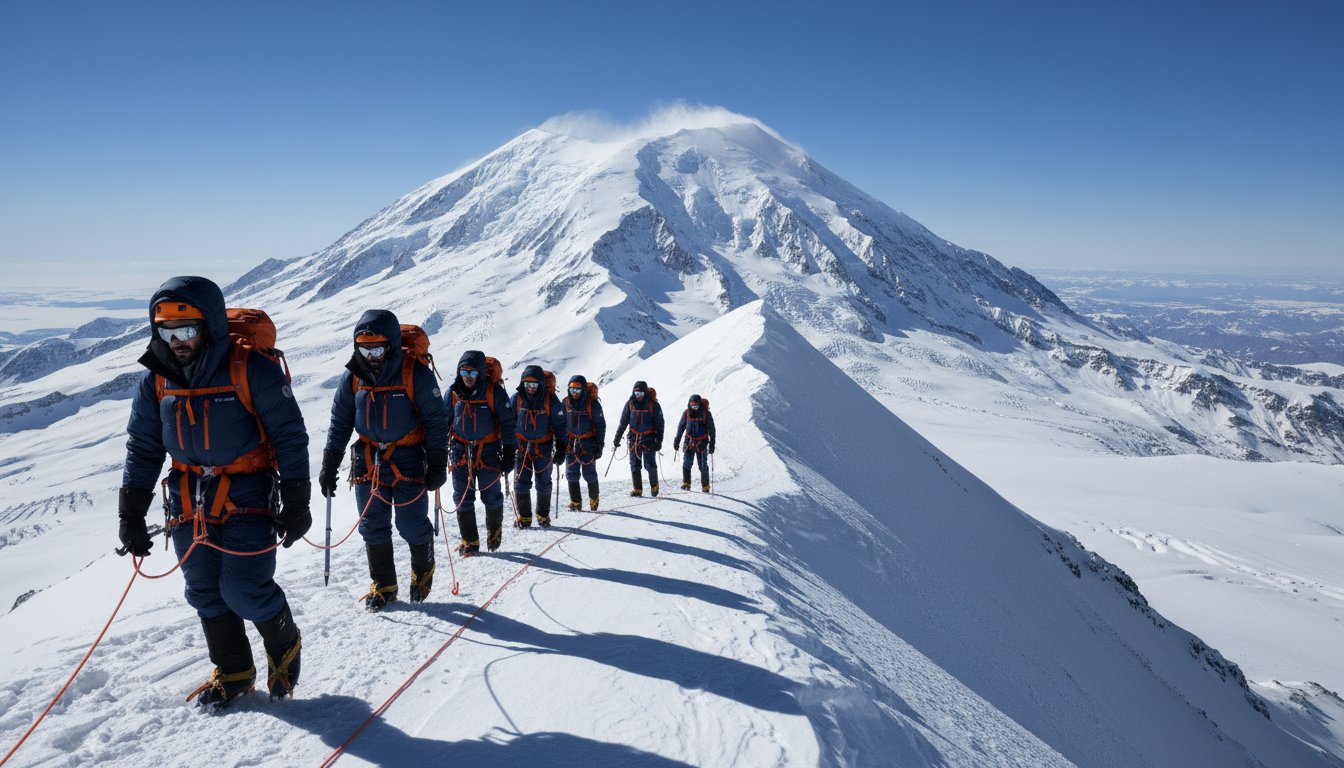
In June 2023, I stood on the Kahiltna Glacier getting ready for the most intimidating climb of my life. Denali has a reputation. To climb denali requires far more than just strong legs or a high lung capacity. It’s a brutal, beautiful test of self-reliance where the relentless sub-arctic cold and the sheer weight of your gear can break even the most prepared athletes. It was intimidating.
So I’m here to give you an honest, unpolished look at what this 6,100 metre peak actually demands of you. We’ll discuss the mental grit needed for the 21 days on the ice and the specific technical skills that separate a standard guided trek from a true Alaskan expedition. This guide provides a realistic assessment of your current readiness, a 12 month training roadmap, and the hard-won lessons I’ve gathered from my trip to this beautiful peak.
You’ll walk away with a clear understanding of the logistics, the risks, and the specific mindset shifts required to move from dreaming about the summit to standing on it.
Key Takeaways
-
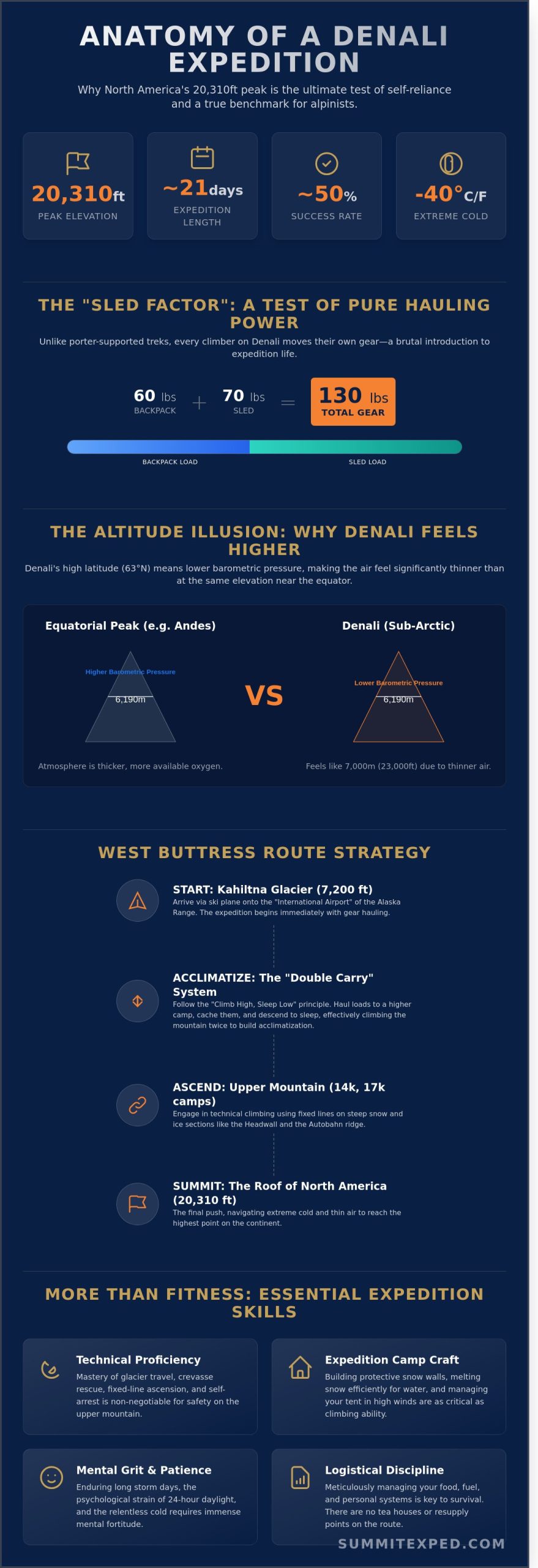
Understand why Denali’s high latitude creates a "thin air" environment that feels significantly more demanding than its actual 6,190m elevation suggests.
-
Learn the tactical realities of the West Buttress route, including how to manage the "Sled Factor" while hauling 40kg of gear across the Kahiltna Glacier.
-
Master the essential camp craft skills, such as building protective snow walls, that are just as critical to your survival as your physical aerobic capacity.
-
Implement a phased, six-month training framework to build the specific weighted-carry strength and endurance required to climb denali safely.
-
Gain insight into an expedition philosophy that prioritizes genuine mountain education and grounded leadership over simply reaching the summit.
Why Climbing Denali is the Ultimate Test for Mountaineers
Denali stands as the crown of the Alaska Range, reaching 6,190 meters into the sub-arctic sky. This is not just another peak on a checklist; it is a massive, glaciated fortress that demands absolute respect. For many, the decision to climb denali represents the definitive transition from being a high-altitude hiker to becoming a true alpinist. You don’t just walk up this mountain. You survive it through a combination of grit, technical skill, and meticulous logistics.
The physical numbers only tell half the story. While Everest sits higher in absolute elevation, Denali is arguably more grueling for the independent climber. You are responsible for every ounce of gear required for your survival. There are no permanent base camp structures or high-altitude tea houses here. You will move roughly 40 kilograms of equipment across the Kahiltna Glacier using a combination of a heavy pack and a plastic sled. It is raw, exhausting work that tests your resolve before you even reach the technical sections of the upper mountain.
To better understand the scale and preparation required for this expedition, watch this helpful video:
The Reality of Sub-Arctic Mountaineering
Denali sits at 63° North latitude. This proximity to the Arctic Circle creates a "latitude effect" where the barometric pressure is lower than at the equator. Consequently, the 6,190-meter summit feels like 7,000 meters in terms of available oxygen. When the temperature drops to -40°C, simple tasks like melting snow for water or putting on boots become monumental challenges. You also face the psychological strain of 24-hour daylight during the May and June climbing season. Trying to sleep in a bright yellow tent at 2:00 AM while the sun is still up requires a disciplined mental approach.
Denali vs. The Other Seven Summits
Contrasting this experience with Kilimanjaro or Aconcagua is essential for realistic planning. While those peaks are significant achievements, they are largely high-altitude treks. To climb denali, you must be proficient in glacier travel, self-arrest, and fixed-line ascension. The "Self-Sufficiency" factor is the biggest differentiator. Without a fleet of porters, you are the engine of the expedition. This level of autonomy is exactly what prepares you for the 8,000-meter peaks of the Himalayas. If you can manage your health and gear for 21 days on the Kahiltna, you have the foundational skills for the world’s highest stages. For climbers who see Denali as one step in a larger journey, our complete guide to climbing the seven summits provides the exact roadmap needed to conquer the highest peak on every continent.
The West Buttress Route: A Tactical Expedition Breakdown
While 90% of climbers choose this path, don’t mistake popularity for ease; the failure rate still hovers around 50% most seasons. Your journey begins in Talkeetna, where a ski plane drops you onto the Kahiltna Glacier. You’ll step off the plane and immediately face the reality of the mountain: a 15-kilogram backpack and a 30-40-kilogram sled tethered to your waist. The weight is necessary, but it’s a brutal introduction to the physical demands of North America’s highest peak.
Success on Denali relies on the ‘Double Carry’ system. You’ll effectively walk the mountain twice. You carry a load of food and fuel to a higher cache, bury it in the snow, and then descend to sleep at your previous camp. This strategy follows the ‘climb high, sleep low’ philosophy, allowing your body to acclimatize to the thinning air while ensuring you aren’t crushed by a 50-60kilogram load in a single push. It’s a grueling cycle that tests your mental fortitude as much as your legs. You’ll spend roughly 14 of your 21 days just moving gear and establishing these lifelines, proving that mountaineering is often more about logistics than summits.
From Base Camp to Camp ’14’
The lower glacier is a land of extremes. Before advancing, ensure you’ve reviewed the NPS mountaineering regulations regarding waste management and camp spacing. The 14,000-foot camp is your primary staging ground. It’s a bustling ‘city’ where teams wait for the perfect weather window to move higher.
The Upper Mountain: The Ridge and the Summit
Above 14,000 feet, the climb shifts from a slog to a technical challenge. You’ll ascend the fixed lines on a 45-degree headwall to reach the 16,000-foot ridge. High Camp at 17,200 feet is a cold, wind-scoured plateau where temperatures drop below -40°F. The final push involves traversing the ‘Autobahn,’ a steep snow slope, followed by the narrow, breathtaking summit ridge. This final traverse is only a few feet wide in places.
The physical toll of these three weeks is immense. Most climbers lose between 5-10 kilograms of body weight during the expedition due to the combination of extreme cold and high-altitude exertion. You’re burning upwards of 6,000 calories a day. Every decision, from how you pack your sled to how you manage your hydration at 17,000 feet, dictates your success.
Mastering Expedition Life: Sleds, Snow Walls, and Grit
Success on the Kahiltna Glacier rarely depends on how fast you can run a 5k. You’ll spend roughly 85% of your expedition doing chores like melting snow, sawing ice blocks, and managing gear. If you can’t handle the domesticity of the ice, the altitude will be the least of your worries.
The Art of the Heavy Load
Managing a 60kg load is a tactical puzzle that can break even the strongest athletes. I generally recommend a 30/70 split; carry 18kg to 20kg in your pack to keep your center of gravity stable, while the remaining 40kg goes in the plastic sled trailing behind you. Expedition weight is the combined burden of survival and ambition. If the sled isn’t packed low and tight, it will roll on every side-hill, dragging you toward a crevasse or simply draining your spirit. To avoid the "tipping sled" nightmare, follow these rules:
-
Pack heavy fuel and food crates at the very bottom and center of the sled.
-
Use a rigid towing system with crossed PVC poles to prevent the sled from overtaking you on descents.
-
Secure the entire load with at least three independent cam straps to prevent shifting on 20-degree slopes.
Training for Denali: A 6-Month Preparation Framework
Denali is a relentless weight-moving project. You aren’t just climbing a mountain; you’re acting as a human pack animal for 21 days straight. Most climbers fail because they underestimate the sheer volume of work required before they even reach High Camp. To successfully climb denali, your preparation must be as methodical as the expedition itself. I’ve seen incredibly fit marathoners crumble under the weight of a 65-pound pack and a 50-pound sled because they lacked the specific functional strength this peak demands.
Managing this level of equipment is a logistical feat that starts before you even reach Alaska; if your travel route includes the Midwest, explore Minneapolis Airport chauffeur service for professional SUV options that can handle your gear crates and duffels with ease.
Phase 1 starts 6 months out and focuses on building your aerobic base. During months 6 to 4, 80 percent of your training should stay in Zone 2. This means keeping your heart rate between 60 and 70 percent of your maximum. You should be able to hold a full conversation while hiking or running. This low-intensity volume builds the mitochondrial density needed to recover night after night in a tent at 14,000 feet.
Phase 2 covers months 4 to 2 and introduces specific strength. This is the "Stairmaster" block. You’ll transition from trail running to weighted step-ups and hill repetitions. Start with 30 pounds and work up to 65 pounds. If you don’t have access to mountains, find the tallest building in your city and start climbing the stairs. You need to prepare your joints for the eccentric load of descending with heavy gear.
Phase 3 is the final 8 weeks before you fly to Talkeetna. This is the time for technical refinement and cold weather testing. You should be practicing your knots with heavy gloves on and ensuring your systems are second nature. This phase isn’t about getting fitter; it’s about becoming more efficient and ensuring your gear doesn’t fail when the temperature hits -40°C.
Physical Conditioning for the Long Haul
Zone 2 training is the secret to surviving the Kahiltna Glacier. If you spend your entire training cycle in Zone 4 or 5, you’ll burn out your central nervous system before you reach the 11,000-foot camp. Long, slow efforts teach your body to burn fat as fuel, which is essential when you’re moving for 8 to 10 hours a day on limited calories.
The tire drag is the most specific workout you can do for Denali. Find a 15-inch car tire, drill a hole through the tread, and attach a 50-foot rope to your backpack waist belt. Dragging this through a local park or on a sandy beach perfectly simulates the constant backwards pull of a loaded sled. It builds the specific hip and glute strength that traditional gym workouts often miss.
Focus your gym sessions on the posterior chain. Deadlifts, Bulgarian split squats, and weighted planks are your best friends. A strong lower back and powerful glutes prevent the common overuse injuries that occur when carrying 130 pounds of total kit across uneven glacier ice.
Technical and Gear Proficiency
Crevasse rescue skills must be instinctive. When a teammate falls into a hole, you don’t have time to check a manual or "figure it out." You should be able to set up a 3-to-1 hauling system in under 10 minutes while wearing mittens. Practice in your backyard or at a local climbing gym until the movements are fluid and fast.
Winter camping shakedowns are mandatory. Spend at least three weekends sleeping outside in the coldest conditions you can find. Practice melting snow for water and operating your multi-fuel stove in the wind. These small tasks become monumental challenges when you are exhausted and oxygen-deprived at 17,000 feet.
Your first time using your 8,000m boots should not be on the Kahiltna Glacier.
Developing an unbreakable mindset is just as important as your physical stats. Denali is famous for its "waiting game," where storms can pin you in a tent for 5 days straight. You need the mental discipline to stay positive in a cramped, frozen space and the grit to push through a 14-hour summit day when every cell in your body wants to stop. If you’re ready to test your limits, join our next Denali prep course to dial in your skills with our expert guides.
Book your Denali expedition consultation with Summit Expeditions
Your Path to the 6,100m Summit
Standing on the 6,100m summit requires more than ambition. It demands a 6-month training framework and the mental stamina to haul a 40 kilogram sled across the Kahiltna Glacier for 21 days. You’ve seen the tactical breakdown of the West Buttress and the grit needed to manage camp life in sub-zero temperatures. Success isn’t found in luck. It’s built through meticulous preparation and the ability to pivot when the Alaskan weather turns.
Start your Denali journey: View our 2026 Expedition Details
Frequently Asked Questions
How hard is it to climb Denali compared to Kilimanjaro?
Denali is significantly more difficult than Kilimanjaro because it requires technical skills and extreme self-sufficiency. While Kilimanjaro is a high-altitude trek where porters carry your gear, a climb denali expedition involves hauling 40-60 kilograms of load. You’ll face temperatures of -40 degrees and navigate active glaciers, which is a massive step up from the non-technical trails of the African peaks. Climbers who have conquered Kilimanjaro and are now planning to tackle all seven of the world’s highest peaks will find our guide to climbing the seven summits an essential resource for structuring that broader journey.
Do I need previous technical climbing experience for the West Buttress?
Yes, you must have proficiency in glacier travel, crevasse rescue, and self-arrest before attempting the West Buttress. Guides expect you to know how to use crampons and ice axes on 45-degree slopes. I recommend completing a 6-day mountaineering course and several winter ascents in the Cascades or Alps to build the necessary muscle memory before you set foot on the Kahiltna Glacier.
What is the success rate for Denali expeditions?
The average summit success rate on Denali sits at 52 percent based on National Park Service data from the last 10 years. In 2023, the rate dropped to 31 percent due to persistent storms and high winds.
How much does it cost to climb Denali in 2026?
Expect to pay between 12,500 and 15,000 USD for a guided expedition in 2026. This price includes the 430 USD National Park Service climbing fee and the 600 USD air taxi flight from Talkeetna to Base Camp. You should also budget an additional 2,000 USD for personal high-altitude gear and specialized travel insurance that covers search and rescue at 20,000 feet.
What happens if there is a medical emergency on the mountain?
Emergency response relies on your team’s self-rescue skills and the National Park Service rangers stationed at the 14,200-foot camp. If a climber suffers from HAPE or a severe fracture, the team initiates a descent or contacts the rangers via satellite phone. High-altitude helicopter evacuations only occur if weather permits and the situation is life-threatening, often resulting in rescue bills exceeding 10,000 USD.
How do you go to the bathroom on Denali?
You use a Clean Mountain Can (CMC), which is a portable, leak-proof toilet provided by the National Park Service. All solid human waste must be collected in these green canisters and either carried out or cached at specific locations.
Can I climb Denali without a guide?
You can climb Denali independently if you have an experienced team and register with the National Park Service 60 days in advance. Solo climbs are rare and require a special permit process due to the extreme risks of glacier travel.
What is the best month to climb Denali for good weather?
Late May to early June offers the most reliable weather window for a climb denali attempt. During this period, the glacier bridges are still frozen and stable, and the extreme winds of April have usually subsided. By late June, the lower glacier often becomes a maze of open crevasses, which makes the initial approach significantly more dangerous and physically exhausting for the team.