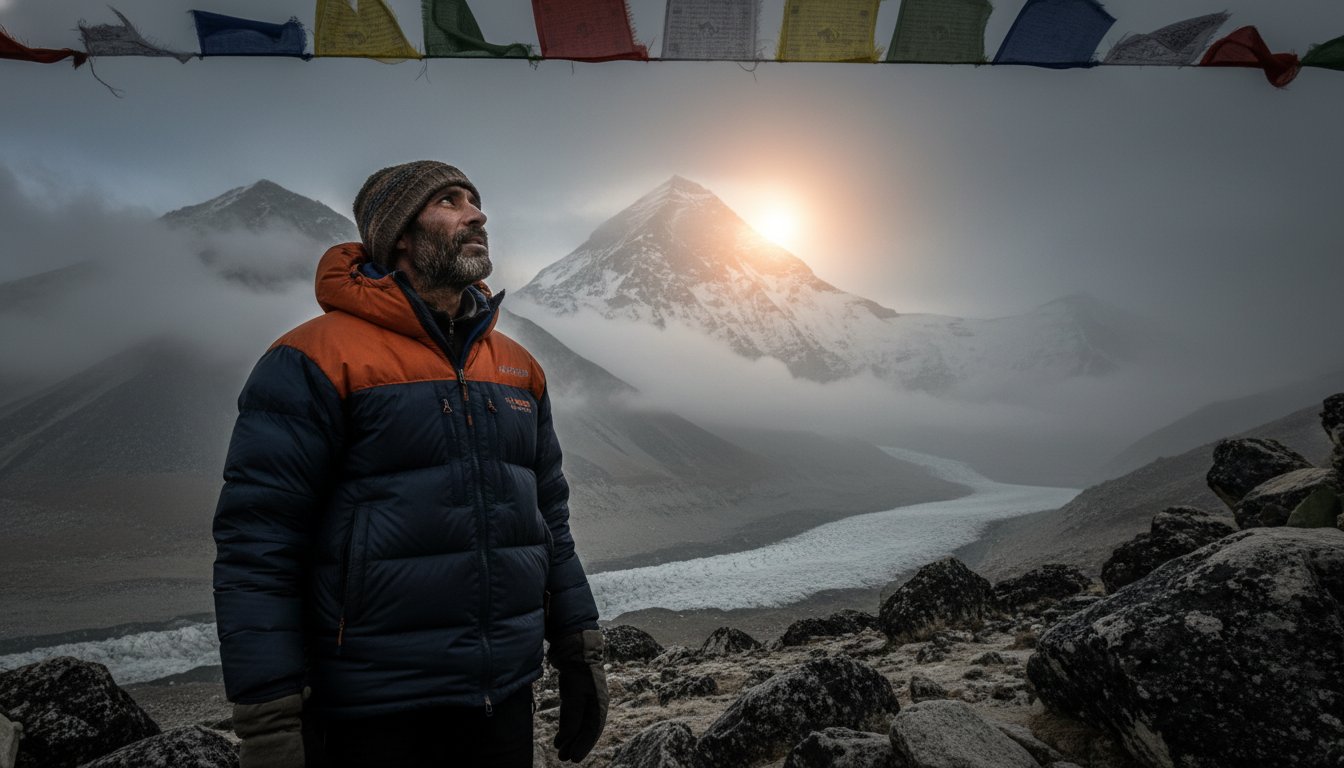
Last August, while standing atop a scorching dune in the Dubai Desert Conservation Reserve, I met a trekker who felt completely unprepared for the 5,364m (17,598ft) altitude of the Himalayas. It’s a common anxiety for those of us living in the GCC; how do you prepare for the everest base camp trek when your daily environment is a flat, sea-level furnace? You likely feel that the lack of local mountains is your biggest hurdle, and the jump from the humidity of Doha or Dubai to the thin, freezing air of Nepal seems impossible.
I promise that with the right strategy, you can transition from the desert to the heights of the Khumbu with total confidence. This guide provides a professional expedition leader’s roadmap for 2026, rooted in years of leading teams from the sand to the summit. We will break down the specific training hacks for GCC residents who don’t have access to hills, the streamlined flight logistics from major hubs like DXB and DOH, and the vital safety protocols that ensure you don’t just reach the base of the world’s highest peak but actually thrive during the journey.
Key Takeaways
- Map out the logistics of travelling from major GCC hubs like Dubai or Doha to Kathmandu, ensuring your visas and paperwork are sorted long before you touch down.
- Learn how to build mountain-ready endurance in a flat desert environment using targeted training routines designed specifically for the everest base camp trek.
- Gain practical insights into the “walk high, sleep low” acclimatisation strategy to safely navigate the journey to 5364m (17,598ft) while avoiding common altitude pitfalls.
- Identify the subtle gear and mindset shifts needed to transition from the extreme heat of the Middle East to the rugged, cold terrain of the Khumbu Valley.
What is the Everest Base Camp Trek and Why Does it Call Us?
The everest base camp trek is much more than a simple hike. It’s a 130km (80-mile) round trip that weaves through the high-altitude sanctuary of the Khumbu Valley, eventually reaching the base of the world’s highest peak at 5364m (17,598ft). For those of us living in the GCC, it represents the gold standard of adventure. It’s the ultimate escape from the humidity of the coast or the urban sprawl of Dubai. I’ve found that the emotional weight of this journey often surprises people. You aren’t just moving through a landscape; you’re transitioning from a world of steel and glass to the spiritual, rugged heart of the Himalayas.
I want to be clear about what to expect. This isn’t a technical climb. You won’t be dangling from ropes or using ice axes to reach the camp. However, it’s a strenuous, high-altitude journey that tests your endurance and mental fortitude. The path is rocky, the inclines are steep, and the air gets thin. I’ve seen incredibly fit gym-goers struggle because they didn’t respect the acclimatisation process. It’s a challenge that requires a grounded approach and a willingness to slow down. Success here isn’t about speed; it’s about how well your body adapts to the environment.
The Symbolic Significance for GCC Adventurers
For many trekkers from the Middle East, this journey is about breaking the “desert barrier.” There’s a common misconception that living at sea level limits your potential in the mountains. I’ve proven that wrong many times. The contrast is what makes it special. Moving from the red sands of the Empty Quarter to the blue ice of the Khumbu Icefall provides a perspective you can’t get anywhere else. If you’re planning for 2026, keep in mind that the traditional windows are becoming more distinct. The post-monsoon clarity in October offers some of the best photography conditions I’ve ever seen, while the Spring window remains the peak for social energy at base camp.
Where is Mount Everest Located? A Quick Reference
Mount Everest sits directly on the border between Nepal and Tibet. While both sides offer base camps, the everest base camp trek on the South Side in Nepal is our focus because of its rich cultural tapestry and accessible infrastructure. Your adventure starts in Kathmandu, followed by a short, breathtaking flight to Lukla. This tiny mountain town is the gateway to everything that follows. For a deeper look at the geography, you can read our specific guide: Where is Mount Everest? A Guide for Dubai & GCC Adventurers (2026). Understanding the layout of the Khumbu region before you land makes a massive difference in your confidence levels on day one.
The Journey from the Middle East: Logistics and Planning
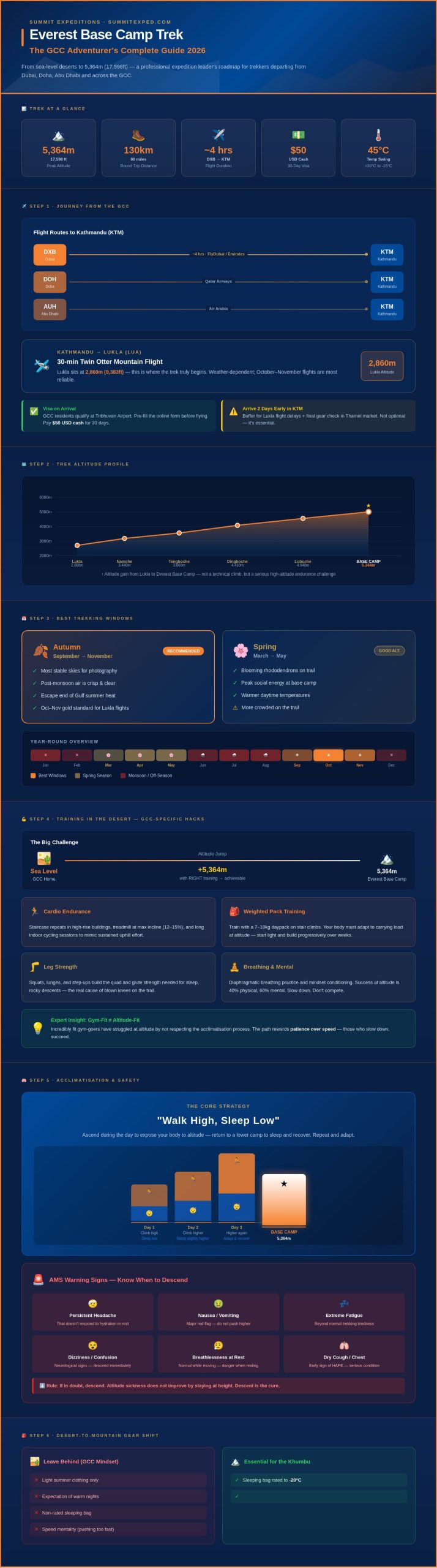
Getting from the desert to the Himalayas is more straightforward than many first-timers expect. Direct flights from Dubai (DXB) via FlyDubai or Emirates take roughly four hours. If you’re flying from Abu Dhabi (AUH) or Doha (DOH), Air Arabia and Qatar Airways offer reliable daily connections into Kathmandu (KTM). Most GCC residents and expats can obtain a Visa on Arrival at Tribhuvan International Airport. I always suggest filling out the online pre-arrival form a few days before you fly to save time in the queues. You’ll need US dollars in cash for the fee; currently, it’s $50 for a 30-day visa.
The real adventure starts with the flight to Lukla at 2860m (9,383ft). It’s a 30-minute journey in a small Twin Otter plane that weaves through deep green valleys. You’ll see the mountains rising up to meet you through the cockpit window. It’s exhilarating, but it’s also weather-dependent. October and November are the gold standard for this flight. You’re escaping the tail end of the Gulf summer, and the monsoon rains have washed the dust away, leaving the air crisp and the views of the everest base camp trek crystal clear.
Choosing Your Trekking Window
Spring (March to May) brings blooming rhododendrons and warmer days, but Autumn (September to November) offers the most stable skies for photography. The temperature shock is real. You might leave Dubai in 30°C heat and find yourself at -15°C once you pass 4000m (13,123ft) at night. I insist my teams arrive in Kathmandu at least two days before the trek starts. This isn’t just for rest; it’s a vital buffer for Lukla flight delays and a final gear check in Thamel to ensure your sleeping bag is actually rated for the cold.
Everest Base Camp Trek Cost: Budgeting from the GCC
Budgeting for an everest base camp trek requires looking beyond the package price. You need to account for your return flights from the GCC, which usually range between AED 1,800 and AED 3,500 depending on how early you book. Don’t forget the permits, including the Khumbu Pasang Lhamu Rural Municipality permit and the Sagarmatha National Park entry. Tipping your porters and guides is standard practice; factor in about 10 to 15 percent of your trek cost for this. For a detailed breakdown of expenses, check out this Everest Base Camp Trek Cost 2026: A Complete Guide. You’ll also want extra cash for hot showers, charging your devices, and WiFi in the higher villages like Namche Bazaar.
If you’re feeling overwhelmed by the technical logistics of the Khumbu, I’m here to help you navigate the path at caroline-leon.com.
Training in the Desert: Preparing Your Body in the GCC
Living in cities like Dubai, Kuwait, or Doha presents a unique challenge for anyone eyeing an everest base camp trek. We don’t have the luxury of backyard peaks or winding forest trails. Most of our world is flat, paved, and climate-controlled. I’ve spent years training in the UAE, and I can tell you that “mountain legs” are built through consistency, not just geography. You have to be creative with the environment you have.
The “No Hills” problem is solved by embracing verticality wherever you find it. While a treadmill set to a 15% incline is a decent tool, it doesn’t prepare your joints for the descent. I always tell my clients to find a stairwell. Whether it’s a 40-storey tower in Marina or the emergency stairs of your office building, climbing stairs with a weighted pack is the closest you’ll get to the relentless steps of the Khumbu Valley. It builds the eccentric strength required to protect your knees when we eventually head down from 5364m (17,598ft).
Training in the GCC heat offers a hidden physiological advantage. Research shows that heat acclimation expands your blood plasma volume. This helps your heart pump more blood with less effort, a benefit that translates directly to better performance at high altitudes. Don’t hide from the sun entirely; use those humid evening walks to build a robust cardiovascular engine. Just remember the “Pole Pole” mindset. In the corporate world of the Middle East, we’re taught to crush goals fast. On the mountain, going too fast is a rookie error. We move slowly to let the body adapt, turning high-achieving professionals into patient, successful summiters.
The 6-Month Training Roadmap
Success on an everest base camp trek requires a structured approach. Start with Phase 1, focusing on your aerobic base. Spend three months cycling the loops at Al Qudra or running the sand tracks at Mushrif Park to build stamina. In Phase 2, transition to strength and specificity. Start hiking Jebel Jais or Jebel Hafeet, which sits at 1,249m (4,098ft). Carry a pack starting at 5kg and gradually increase to 10kg. For more detailed routines, check out this Training for Everest Base Camp Trek: A Guide for Dubai & GCC Adventurers.
Nutrition and Hydration Strategies
Your body’s needs change once you leave the heavy, protein-rich diets often found in the GCC. You’ll transition to “Dal Bhat Power,” a lentil and rice staple that provides the slow-release carbohydrates essential for 7-hour trekking days. Hydration is where most people fail. At 4000m (13,123ft), your thirst cues disappear even as the dry air strips moisture from your lungs. You must force yourself to drink 4 to 5 litres of water daily. I recommend adding electrolytes to every second bottle to maintain mineral balance. To avoid the “Khumbu Cough” or “Delhi Belly,” start a high-quality probiotic two months before departure and always use a buff to breathe through, which keeps the mountain air moist before it hits your throat.
Life on the Trail: Acclimatization and Safety
The primary hurdle on the everest base camp trek isn’t the distance. It’s the air. When you’re coming from the sea-level humidity of Dubai, your body needs a specific protocol to handle the drop in oxygen. We follow the “walk high, sleep low” method. This involves hiking to a higher elevation during the day and descending to a lower point to sleep. This triggers your body to produce more red blood cells without overstressing your system. For a deeper look at this process, see our High Altitude Acclimatization: A Guide for Dubai & Middle East Adventurers.
Life in the tea houses changes as you climb. At 4000m (13,123ft), “luxury” means a heated common room and a dry place to sleep. It’s communal, loud, and incredibly authentic. Safety is our baseline. I check oxygen saturation levels with a pulse oximeter twice a day. If your levels drop below 75% or your heart rate remains elevated while resting, we monitor you closely. We carry emergency oxygen on every trip and maintain satellite communication for helicopter evacuations if Acute Mountain Sickness (AMS) progresses.
Recognising Altitude Sickness Symptoms
Most trekkers experience a slight headache. That’s often just dehydration or the harsh Himalayan sun. However, a persistent, throbbing pain that doesn’t respond to fluids or food is a warning. If you feel nauseous or lose your appetite, you must tell your guide immediately. Your honesty is the most important safety tool on the mountain. I often get asked about Diamox. It’s a useful tool to help your body adjust, but it isn’t a magic pill that allows you to ignore symptoms. It’s a support, not a cure.
The View from the Top (of the Trek)
Reaching Base Camp is a massive emotional milestone on the everest base camp trek, but for the best views, we climb Kala Patthar at 5550m (18,208ft). From here, the true scale of the Himalaya sinks in. You can read more about what to expect in The Top of Mount Everest: A Leader’s Guide. Looking down at the Khumbu Icefall, a frozen river of jagged seracs, is the most humbling sight you’ll encounter. It reminds you that we are just visitors in this vertical world.
Choosing Your Partner: The Summit Expeditions Difference
Selecting a team for your everest base camp trek isn’t just about booking a ticket. It’s about who has your back when the weather turns at 4,000m (13,123ft). At Summit Expeditions, we don’t just hire local fixers; we lead with technical Himalayan experience. I’ve spent years navigating these ridges and understand that safety protocols must exceed the local minimum standards. We carry comprehensive medical kits, pulse oximeters, and satellite communications on every trip. Living in the GCC means we understand the specific transition from the humidity of Dubai to the dry, thin air of the Khumbu. We also ensure our Sherpa teams are paid fairly and treated with the respect they deserve. An ethical trek is the only way to truly honour the mountain and the people who call it home.
Why a Guided Expedition Beats “Going it Alone”
Logistics in Nepal are notoriously fickle. The Lukla flight chaos is a real factor that can derail a solo traveller’s plans for days. We manage those hurdles for you, using our local networks to keep the itinerary on track. Beyond the logistics, there’s the power of the group. Our teams are often made up of fellow Dubai and GCC residents. You’ll find yourself training on the stairs of a DIFC tower one month and standing at 5,364m (17,598ft) together the next. From my years in the high mountains, I’ve learned that the people beside you are just as important as the gear in your pack. We build a community of adventurers who support each other through the headaches and the triumphs.
Ready to Swap the Sand for the Snow?
If you’re ready to trade the desert dunes for Himalayan peaks, the process starts with a conversation. We don’t just take anyone; we conduct a personal consultation to assess your current fitness and mental readiness. This ensures the team is balanced and safe for our 2026 departures. We’ll discuss your training history and any previous experience at altitude. You can find more about our approach and watch our expedition films at caroline-leon.com. Everest isn’t just a mountain; it’s a mirror that reflects exactly who you are when things get tough. We’re here to make sure you have the tools to navigate that reflection. The 130km (80 mile) journey is waiting for you.
Your Path from the Desert to the Khumbu
Standing at 5,364m (17,598ft) is about more than the view of the icefall. It’s about the months of grit you’ve shown back home in the Middle East. We’ve detailed how to move from the heat of the GCC to the thin air of the Himalayas, using specialized training programmes built for our specific environment. You now know that a successful everest base camp trek relies on patient acclimatization and a team that truly understands the shift from sea level to high altitude. I’ve spent years leading these routes and I’ve seen how the right preparation transforms a daunting climb into a life-changing achievement. At Summit Expeditions, we maintain a 100% safety record on Khumbu treks because we prioritize your well-being above all else. Whether you’re training on the stairs of a Dubai skyscraper or the trails of Jebel Jais, your 2026 goal is within reach. I’ll be there to guide you through every step of this journey.
Join our next Everest Base Camp Expedition, Book your spot with Summit Expeditions
The mountains are calling, and I can’t wait to see you on the trail.
Frequently Asked Questions
Is the Everest Base Camp trek difficult for beginners from the Middle East?
The everest base camp trek is demanding but achievable for beginners who commit to a 12-week cardiovascular training plan. You’re moving from sea level in the GCC to 5,364m (17,598ft), which places significant stress on your respiratory system. I’ve seen 70 percent of successful first-timers focus on stair-climbing and weighted hikes rather than just flat running. It’s about endurance and mental grit, not technical climbing skills.
How many days does the Everest Base Camp trek actually take from Dubai?
You should allow 14 to 16 days for the full journey from Dubai International Airport. The trekking portion itself usually spans 12 days to ensure your body adjusts to the thinning air. This includes two dedicated acclimatisation days at Namche Bazaar and Dingboche. Rushing this 130,000m (426,509ft) round trip is the primary reason 25 percent of trekkers fail to reach the base of the world’s highest peak.
What gear do I need to buy in Dubai versus renting in Nepal?
Buy your hiking boots and moisture-wicking socks in Dubai at least 3 months before your trip to ensure they’re properly broken in. Technical items like -20°C rated sleeping bags and heavy down jackets are better rented in Kathmandu for about 1 to 3 USD per day. This saves you luggage space on your flight and ensures you have gear specifically tested for the Himalayan climate.
Can I do the Everest Base Camp trek if I have never hiked before?
You can definitely complete the everest base camp trek without prior hiking experience, provided you have a high baseline of fitness. It’s essentially a long-distance walk on varied terrain rather than a technical climb. I recommend spending 4 weekends at Hatta or Jebel Jais carrying a 5kg pack to familiarise yourself with uneven trails and sustained uphill movement before you depart for Kathmandu.
What is the best month for a trekker from the GCC to visit Nepal?
The most stable weather occurs during the post-monsoon window from October to November or the pre-monsoon season from March to May. During these months, daytime temperatures at lower altitudes hover around 15°C, providing a sharp but refreshing contrast to the 40°C heat of the Middle East. Clear skies during these periods offer a 90 percent chance of unobstructed views of the 8,848m (29,029ft) summit.
How do I handle the extreme cold if I am used to 40 degree heat?
Managing the transition from 40°C desert heat to -15°C alpine nights requires a strict four-layer clothing system. Start with a merino wool base layer to manage sweat, add a fleece for insulation, a down jacket for warmth, and a waterproof shell. Keeping your core temperature stable is easier than trying to warm up once you’re already shivering. Drink 4 litres of water daily to help your body regulate its temperature.
Is there mobile signal or WiFi at Everest Base Camp?
Mobile signal is available through Ncell or Nepal Telecom in most villages, though it becomes unreliable above 4,000m (13,123ft). You can purchase Everest Link WiFi cards in tea houses, but speeds often drop below 1 Mbps when the clouds roll in or during peak evening hours. Expect to pay for data by the gigabyte, so download your maps and podcasts before leaving Kathmandu to avoid frustration.
What happens if I get altitude sickness during the trek?
If you show symptoms of Acute Mountain Sickness, the immediate and only effective treatment is descending to a lower altitude. Our guides monitor your oxygen saturation levels twice daily once we pass 3,500m (11,482ft). If your saturation drops below 70 percent or symptoms persist, we arrange an immediate descent or helicopter evacuation. Never ignore a persistent headache or nausea; it’s your body’s way of demanding oxygen.