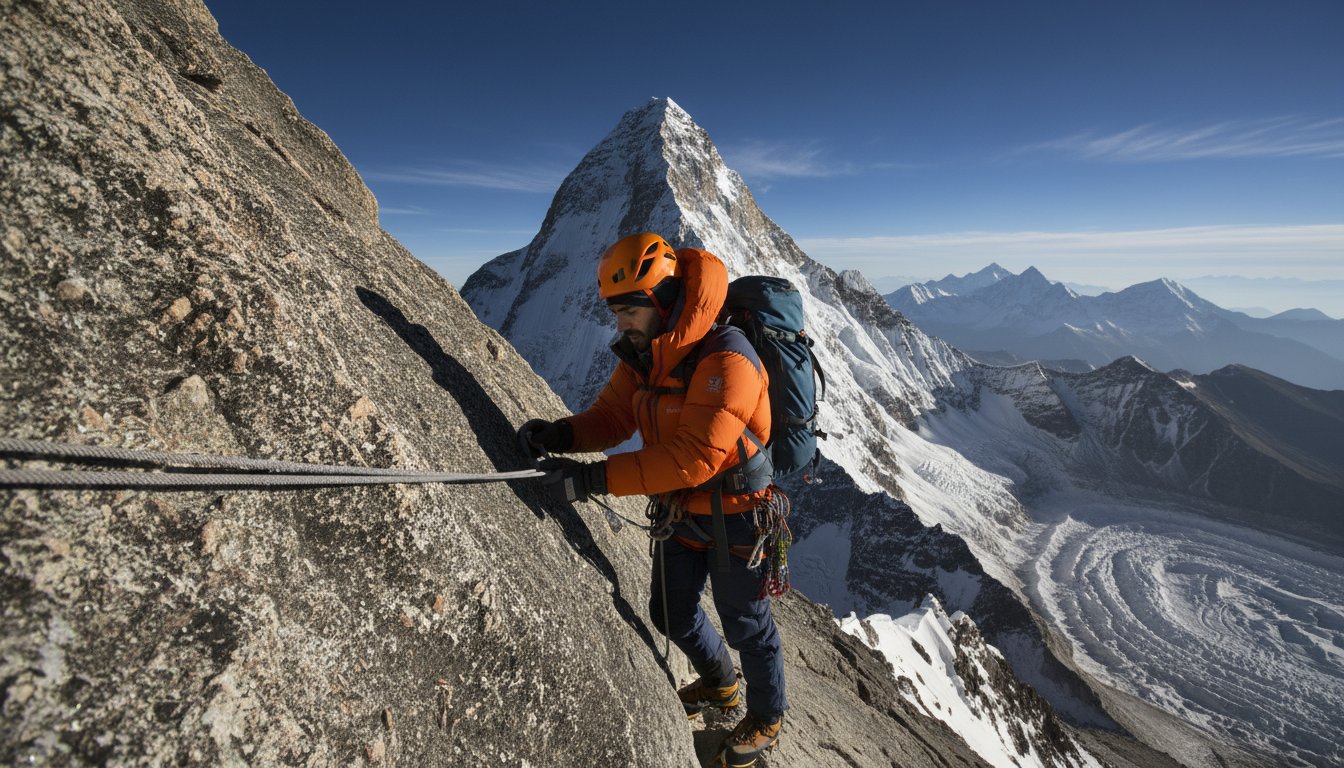
What if the greatest challenge of your ama dablam expedition isn’t the vertical ice of the Grey Tower, but the 40°C humidity of a Dubai afternoon? I’ve spent years training in the desert heat while preparing for the biting winds at 6,812m (22,349ft), and I know how disconnected those two worlds can feel. It’s a massive leap to move from high-altitude trekking to the technical granite of the “Matterhorn of the Himalayas,” especially when your daily life involves the boardroom rather than the base camp. This guide provides a practical, experience-based roadmap for Middle Eastern mountaineers, focusing on how to build technical skills and cold-weather resilience while living in the GCC. We’ll explore the specific 2026 logistics, training cycles for desert-based athletes, and the essential gear tweaks that ensure you reach the summit and return home safely to your family and career.
Key Takeaways
- Identify the specific technical skills, such as Jumar ascents and abseiling, needed to transition from a trekker to a competent climber on the South West Ridge.
- Evaluate why a pre-acclimatisation climb on Lobuche East 6,119m (20,075ft) is the most effective strategy for managing work leave while maximising your summit success.
- Master a “Desert to Peak” training routine that utilises Dubai’s infrastructure to build the vertical endurance required for the Himalayas.
- Learn how to coordinate seamless logistics for your 2026 ama dablam expedition, from direct flights out of the GCC to expert-led support on the mountain.
Why the Ama Dablam Expedition is the Ultimate Himalayan Milestone
I’ve spent years moving through the Khumbu Valley, and few sights compare to the first time you see the “Matterhorn of the Himalayas” piercing the skyline. Standing at 6,812m (22,349ft), Ama Dablam isn’t just a mountain; it’s a statement. While many climbers focus on the 8,000m (26,247ft) giants, this peak represents the gold standard for those who want to transition from high-altitude trekking to genuine alpine climbing. An ama dablam expedition demands respect not because of its height, but because of the technical skill and mental grit required to navigate its steep, icy ribs.
To get a true sense of the terrain and the sheer beauty of the Khumbu region, watch this helpful video from the field:
The Prestige of the 6,812m (22,349ft) Summit
In the mountaineering community, standing on top of Ama Dablam often carries more weight than summiting a non-technical 8,000m (26,247ft) peak. The South West Ridge is widely considered one of the most aesthetic routes in the world, offering a line that is as logical as it is daunting. When we talk about “airy” ridges, we’re describing the sensation of having thousands of metres of space on either side of your boots. It’s a focused, meditative experience where every placement of your crampon matters. The reward for this intensity is a panoramic view that puts you eye-to-eye with Everest, Lhotse, and Makalu. You aren’t just looking at the giants; you’re standing amongst them on a summit that feels like the very edge of the world.
Ama Dablam vs. Trekking Peaks: Island and Mera
Many climbers come to me after completing Island Peak or Mera Peak, thinking they’re ready for the next step. It’s vital to understand that an ama dablam expedition is a significant jump in difficulty. While trekking peaks are primarily “walk-ups” with some fixed-line sections, Ama Dablam requires sustained rock climbing at Grade 4 or 5 and vertical ice sections. You’ll be using ascenders on steep terrain and rappelling down technical faces while managing the effects of thin air.
If you’re coming from a trekking background, I almost always recommend using Lobuche East at 6,119m (20,075ft) as a warm-up. It provides the perfect training ground for the mixed terrain you’ll face later. For those still building their foundation, you might consider starting with a slightly more accessible objective. You can Climb Island Peak from Dubai & the Middle East to test your systems before committing to the technical rigours of the “Mother’s Necklace.” Preparation isn’t just about fitness; it’s about being comfortable with the gear in high-stress environments.
Assessing Your Readiness: Are You Prepared for the South West Ridge?
Preparing for an ama dablam expedition requires a fundamental shift in your perspective. You’re no longer just a trekker; you’re a climber entering a vertical world. If you’ve spent years hiking high-altitude trails, you have a solid foundation, but the South West Ridge demands specific technical mastery. You must move efficiently on steep terrain while wearing heavy boots, crampons, and thick gloves. I’ve seen incredibly fit athletes struggle because they hadn’t spent enough time on technical rock before arriving in Nepal. It’s about being comfortable with a Jumar for ascending and having the muscle memory for safe abseiling during the long, fatiguing descent.
Physical conditioning is your insurance policy. You should prepare for 12-hour summit days where your heart rate stays elevated for hours on end. This isn’t just about gym sessions; it’s about weighted hill climbs and sustained cardio that builds true mountain endurance. The Ama Dablam climbing history shows that while the South West Ridge is the most popular route, it remains a serious undertaking that punishes those who underestimate the physical toll of technical climbing at 6000m (19,685ft).
Technical Proficiency Requirements
Fixed line skills are non-negotiable for your safety and the safety of the team. You need to be able to transition your safety gear across anchors on vertical rock without thinking twice. We expect you to be comfortable on Grade 4/5 (UK) or 5.6 (US) terrain, even when the air is thin and the wind is biting. The Yellow Tower is a steep, 15-metre (49ft) vertical rock wall that demands focused strength at high altitude, whereas the Mushroom Ridge is a narrow, undulating crest of snow and ice that requires perfect balance above massive drops.
For your training, focus on moving on rock with your crampons on. It feels clunky at first, but gaining confidence on mixed ground is what separates a successful climber from one who gets stuck at Camp 2. Practice your transitions until they’re fluid. Every minute you save by being efficient is energy you’ll have in reserve for the summit push.
The Mental Game at 6000m (19,685ft)
The psychological challenge of Ama Dablam is often more intense than the physical one. You’ll face ‘the void’ frequently, looking down at thousands of metres of air right beneath your boots. Maintaining focus when you’re exhausted is vital, especially during the descent. Most accidents happen when climbers relax their guard after reaching the top. You need the grit to stay sharp for every single abseil on the way back to camp.
Staying positive during bad weather rotations is another hurdle. You might spend days in a tent waiting for a window, and that’s when doubt creeps in. I’ve found that mental grit outweighs technical perfection every time; the climbers who succeed are the ones who can manage their anxiety and stay patient when the mountain says no. If you’re looking for more insight into the mindset required for these peaks, you can find detailed gear and preparation breakdowns on my personal site.

Comparing Expedition Strategies: Lobuche Pre-Acclimatisation vs. Direct Entry
Choosing the right strategy for your ama dablam expedition isn’t just about physical fitness. It’s about how your body handles the physiological stress of thin air. I’ve seen many capable climbers struggle because they rushed their arrival at altitude. We strongly recommend an initial ascent of Lobuche East 6,119m (20,075ft) before you even step foot on Ama Dablam. This isn’t just a warm-up trek; it’s a vital training phase that serves two purposes.
The Lobuche East Advantage
First, Lobuche East allows you to refresh your technical skills at 6,000m (19,685ft). You’ll practice fixed-line transitions and crampon work on varied terrain without the intense pressure of the main event. Second, the biological benefits are massive. By spending nights at 5,000m (16,404ft) and tagging a 6,000m (19,685ft) peak, you arrive at Ama Dablam Base Camp already acclimatised. Your body has already started producing the extra red blood cells needed for the higher camps, which significantly reduces the risk of altitude sickness later on. If you want to understand exactly what this preparatory climb involves for GCC-based mountaineers, our dedicated guide on how to climb Lobuche East from Dubai and the Middle East covers the technical headwall, fixed-line skills, and acclimatisation strategies in full detail.
Expedition Duration and Pacing
Time is your most valuable asset in the Himalayas. A 25-day itinerary might look attractive if you’re trying to save on work leave, but it leaves zero margin for error. We prefer a 36-day window. Rushing the 6,812m (22,349ft) summit is the primary cause of failure. High-altitude weather is unpredictable. Having a wider window allows us to wait for a stable weather system rather than being forced to climb in high winds because our time has run out.
Success also depends on how you recover. We structure our expeditions to include strategic rest days in Namche Bazaar. This lower altitude allows for “Middle Eastern recovery,” where the air is thick enough for your body to actually heal and rebuild strength before the final push. When you look at the history of technical routes on Ama Dablam, you’ll see that patience and proper pacing are the common threads among successful teams.
Logistics and Safety Ratios
The support structure you choose will define your experience. We provide a private Base Camp setup because hygiene and mental space are critical. Large, communal camps are often breeding grounds for the “Khumbu Cough.” A private space means better food quality control and a quieter environment for sleep.
Your safety on an ama dablam expedition is also tied to your Sherpa-to-client ratio. We advocate for a 1:1 ratio. On a 1:2 ratio, if your climbing partner feels unwell and needs to descend, your summit bid usually ends right there. With a 1:1 ratio, you have a dedicated professional whose only priority is your safety and your specific pace. This setup doesn’t just increase your summit probability; it ensures you have a safety net that is entirely focused on you.
Training for Ama Dablam While Living in Dubai and the Middle East
Preparing for an ama dablam expedition while living at sea level in the desert might seem like a disadvantage, but I’ve found it’s actually a hidden opportunity. My “Desert to Peak” philosophy focuses on using the unique environment of the Middle East to build a physiological engine that thrives under pressure. We don’t have the luxury of backyard mountains, so we substitute elevation with intensity and creative use of local infrastructure.
The heat is your secret weapon. Training in 40°C (104°F) temperatures increases your blood plasma volume and improves cardiovascular efficiency. When you finally step into the thin, cold air of the Himalayas, your heart doesn’t have to work quite as hard to move oxygen. It’s a brutal way to train, but the results at 6000m (19,685ft) are undeniable.
The Dubai Mountaineer’s Workout
You’ll become very familiar with the stairwells of JLT and Dubai Marina. I recommend finding a tower with at least 60 floors and doing multiple laps with a weighted pack. Start with 10kg (22lb) and work your way up to 18kg (40lb). This isn’t just about the climb. The descent on Ama Dablam is incredibly taxing on the joints. I dedicate two sessions a week specifically to “eccentric” leg strength. Think slow, controlled step-downs and Bulgarian split squats. This prevents your knees from screaming when you’re descending from Camp 2 to Base Camp.
Technical skills are non-negotiable. You can’t learn to juggle jumars and carabiners on the side of a mountain. Use indoor walls like Rock Republic or Mountain Extreme to get comfortable in your harness. Practice your transitions until they’re muscle memory. You want to be able to clip into a fixed line while wearing thick gloves without even thinking about it.
Acclimatisation Drills and Mindset
Since we can’t live at altitude, we simulate the fatigue through high-intensity interval training (HIIT). By pushing your heart rate to near-maximum levels in short bursts, you teach your central nervous system to remain calm when you’re gasping for air. This mental resilience is what gets you through the Mushroom Ridge. For a deeper dive into these strategies, check out my guide on High Altitude Acclimatisation: A Guide for Dubai Adventurers.
One of my best gear tips is to wear your 8000m boots during your desert hikes. I’ve spent many mornings on the rocky trails of Jebel Jais in full expedition boots. It looks ridiculous to onlookers, but it’s the only way to find hotspots and ensure your feet are toughened up. Don’t let the first time you wear your summit boots be on the actual ama dablam expedition. Test everything in the heat so you can trust it in the cold.
Ready to start your journey from the desert to the Himalayas? Apply for our next expedition team today.
Booking Your 2026 Ama Dablam Expedition with Summit Expeditions
Choosing the right team for your ama dablam expedition is the most critical decision you’ll make before you even set foot in Nepal. At Summit Expeditions, we bridge the gap between the high-pressure corporate environments of the GCC and the technical demands of the Himalayas. I’ve spent years leading climbers from Dubai and Abu Dhabi, and I know that your time is your most valuable asset. We’ve streamlined our 2026 Autumn itinerary to respect that, ensuring every day on the mountain counts toward your eventual success.
Accessibility is a major factor for our regional climbers. You can board a direct flight from Dubai (DXB) or Doha (DOH) and arrive in Kathmandu (KTM) in approximately four hours and forty-five minutes. From the moment you land, we handle the complex logistics. Our full-service approach covers the entire journey, from the initial trek through the Khumbu Valley to the establishment of high camps on the mountain’s technical ridges. We don’t just provide a service; we provide a safety-first environment that goes beyond industry norms, utilizing a 1:1 climber-to-Sherpa ratio for the final summit push.
What’s Included in Your Expedition
Success on a peak like Ama Dablam, which stands at 6812m (22,349ft), requires more than just physical grit. You’ll be climbing under my direct leadership alongside a Sherpa team that has stood on the summit of Everest multiple times. We provide high-quality Base Camp facilities, including heated dining tents and nutritious, fresh food designed to keep your energy levels stable at high altitude. While we provide technical gear like ropes and high-altitude tents, you’ll need to bring your own personal kit, such as 8000m (26,247ft) rated boots and a down suit. We’ll provide a detailed gear list during our prep sessions to ensure you aren’t carrying unnecessary weight or missing vital equipment.
Next Steps: Join the 2026 Team
Our Autumn 2026 season is already seeing interest from climbers across the Middle East looking for a serious technical challenge. To ensure the highest safety standards and personal attention, we limit our team sizes to a maximum of eight participants. We’ll be hosting in-person briefing sessions in Dubai and Abu Dhabi starting in January 2026 to discuss training schedules, gear requirements, and the technical skills you’ll need to master before departure. Don’t leave your preparation to the last minute. If you’re ready to transition from trekking to technical mountaineering, Book your Ama Dablam Expedition with Summit Expeditions today and let’s start the journey together.
Claim Your Place on the South West Ridge
Standing at 6812m (22,349ft), Ama Dablam isn’t just another peak; it’s a technical masterclass that demands respect and meticulous preparation. We’ve looked at why training in the 40 degree heat of the Middle East requires a specific approach to cardiovascular endurance and why choosing a Lobuche East acclimatisation rotation can increase your summit success rate by up to 30 percent. This isn’t a journey you take lightly. It requires a solid grasp of fixed-line transitions and the mental grit to handle exposed terrain.
Our 2026 ama dablam expedition is built on the collective experience of Omani mountaineer Nadhir Al Harthy and my own years spent guiding in the Himalayas. We’ve refined our logistics specifically for residents in the UAE and wider region, ensuring your travel from the desert to the Khumbu is seamless. I’ll be there in the field with you, alongside our expert team, to navigate the objective hazards and celebrate the hard-won milestones. The mountain is waiting, and the right preparation starts today.
Book your 2026 Ama Dablam Expedition with Summit Expeditions
I look forward to seeing you at Base Camp.
Frequently Asked Questions
How technical is the Ama Dablam expedition compared to Island Peak?
Ama Dablam is significantly more technical than Island Peak, moving from a basic trekking peak to a serious mountaineering challenge. While Island Peak is graded PD plus, Ama Dablam is rated TD, meaning “Très Difficile” or very difficult. You’ll face vertical rock sections on the Yellow Tower and mixed ice climbing on the Mushroom Ridge, whereas Island Peak is mostly a steep snow plod with one headwall.
What is the best time of year to climb Ama Dablam from the Middle East?
The post-monsoon season from October to November is the prime window for an ama dablam expedition. This 60 day period offers the most stable weather and crisp, clear views of the Khumbu region. For climbers leaving the humidity of the GCC, this autumn window provides more manageable trekking temperatures before the extreme winter cold sets in during December.
Do I need previous technical rock climbing experience for Ama Dablam?
You must have technical rock climbing experience and be comfortable on exposed Class 4 or 5 terrain in big boots. I recommend having at least 50 hours of outdoor climbing experience and a solid understanding of fixed line or “Jumar” techniques. The South West Ridge involves sustained vertical sections at 6,000m (19,685ft), so your technical skills need to be second nature when oxygen levels are low.
How much does an Ama Dablam expedition cost from Dubai?
While expedition fees vary, you should budget for return flights from DXB to Kathmandu which typically cost between 2,500 and 4,800 AED. The Nepal government currently sets the autumn climbing permit fee at 400 USD per person. You’ll also need to account for high altitude insurance and personal gear, which often requires an additional investment of 2,000 USD for quality technical equipment.
What is the summit day like on the South West Ridge?
Summit day is a demanding 10 to 14 hour round trip that begins in the dark around midnight from Camp 2 or Camp 3. You’ll climb 812m (2,664ft) of vertical gain across steep ice flutings and narrow snow ridges. Reaching the 6,812m (22,349ft) summit provides an unparalleled view of four of the world’s six highest peaks, but the descent requires absolute focus on your rappelling technique.
How do I manage the heat to cold transition when leaving the GCC?
The transition from 35°C in the Middle East to -20°C on the mountain is best managed through a 14 day gradual acclimatisation trek. I suggest testing your layering system during indoor training sessions in Dubai to understand your sweat rates before you arrive. Once on the mountain, we use high loft down jackets and 8000m (26,247ft) rated boots to protect against the rapid temperature drops that occur the moment the sun dips behind the peaks.
Is oxygen used on an Ama Dablam expedition?
Most climbers don’t use supplemental oxygen because the summit sits below the 7,000m (22,966ft) threshold where it’s typically required. However, we always have emergency cylinders available at the high camps for safety. Some climbers choose to use a low flow of 2 litres per minute during the final push to help maintain body warmth and mental clarity on the technical traverses.
What happens if I get altitude sickness during the climb?
If you show signs of Acute Mountain Sickness, the immediate and non negotiable response is to stop ascending and descend at least 500m (1,640ft). We monitor your oxygen saturation levels twice daily; if your readings fall below 70% or you show signs of coordination loss, we begin a descent. Safety is our priority, and we maintain 24 hour radio contact with Base Camp to coordinate helicopter evacuations if symptoms don’t improve with lower elevation.