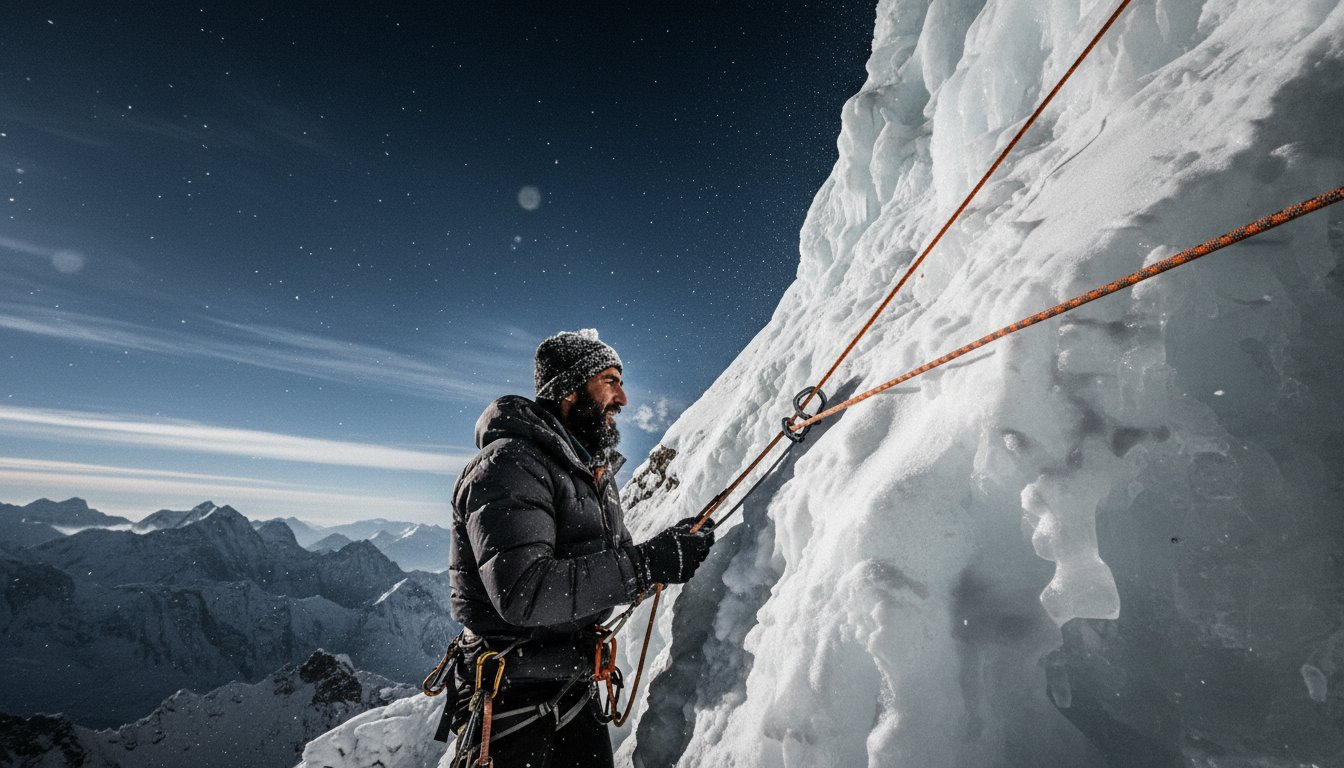
What if the biggest obstacle to your first Himalayan summit isn’t the thin air, but the gear hanging from your harness? In November 2023, I stood at High Camp with a group of strong trekkers who realised that hiking fitness only gets you so far when you’re staring down a vertical wall of ice. You’ve likely conquered the rocky trails of the Hajar mountains or spent weekends training in the heat of the UAE, yet the decision to climb island peak feels like a massive technical leap. It’s a common hesitation, especially when you’re living at sea level without a glacier in sight.
I understand that transition because I’ve lived it. You want the glory of standing at 6,189m (20,305ft) without the fear that you’re underprepared for the technical sections. This guide is my blueprint for your 2026 expedition, designed to turn your trekking endurance into mountaineering skill. We’ll cover everything from mastering the jumar on the infamous headwall to specific training hacks for GCC residents, ensuring you head to Nepal with absolute confidence in your safety and your summit potential.
Key Takeaways
- Understand why this 6,189m (20,305ft) peak is the ultimate progression for trekkers looking to bridge the gap into technical Himalayan mountaineering.
- Get a realistic breakdown of the three technical phases you’ll face to climb island peak, including the rock scramble, glacier travel, and the fixed-line headwall.
- Learn how to effectively train for sub-zero conditions while living in the Middle East by utilising local terrain like Jebel Jais and the Hajar Mountains.
- Compare the tactical advantages of using a High Camp versus a Base Camp push to manage your energy and acclimatisation during the summit window.
- Discover why small team dynamics and regional leadership from the GCC are essential for safety and success on the mountain’s technical sections.
What is Island Peak (Imja Tse) and Why is it the Middle East’s Favourite 6,000m Goal?
Island Peak, or Imja Tse as it’s known locally, sits at a formidable 6,189m (20,305ft) in the heart of Nepal’s Sagarmatha National Park. For those asking What is Island Peak (Imja Tse), the answer lies in its unique geography. When Eric Shipton’s party first saw it in 1952, they named it Island Peak because it looked like a literal island of rock floating in a sea of ice. It’s tucked between the massive South Face of Lhotse and the frozen waves of the Imja Glacier, standing as a sentinel in the Khumbu Valley.
If you’re planning to climb island peak, you’re joining a growing community of GCC-based adventurers who are looking for more than just a walk to Everest Base Camp. We’ve seen a 25% increase in bookings from Dubai and Doha for the 2026 season compared to three years ago. This peak offers that rare mix of high altitude and entry-level technicality that’s hard to find elsewhere. It’s the moment many of my clients stop being trekkers and start being mountaineers.
To better understand this concept, watch this helpful video:
Island Peak at a Glance: Altitude and Location
At 6,189m (20,305ft), the altitude is serious business. You’ll stand in the shadow of Lhotse, the world’s fourth highest mountain, and look across at the iconic spire of Ama Dablam. Most of our expeditions start with a direct flight from Dubai or Doha to Kathmandu. From there, it’s a short hop to Lukla, the gateway to the Khumbu. It’s a journey that takes you from the desert heat to the arctic chill of the high Himalaya in less than 48 hours, requiring a disciplined approach to acclimatisation.
The “Bridge Peak” Concept
I often describe this mountain as the perfect bridge. It’s the logical next step for anyone who’s finished the Everest Base Camp trek and felt that itch for something more. You’ll move from “walking” to “climbing,” which requires a massive psychological shift. You’ll learn to use fixed lines, jumars, and crampons on a 45-degree headwall. This transition is a core part of the Himalayan Mountaineering pillar that we use to train our climbers. When you decide to climb island peak, you’re committing to a new level of discipline and gear management that defines the modern alpinist. It’s not just about physical fitness; it’s about building the technical confidence to handle a 6,000m summit safely. For those looking to progress even further, you might consider the next logical step to climb Mera Peak at 6,476m, which offers an even higher altitude challenge while maintaining similar technical requirements.
The Technical Reality: Why Island Peak is Not Just a “Trek”
The most common mistake I see is climbers underestimating the mountain because of its label as a “trekking peak.” This is a technical misnomer that confuses many. While you don’t need to be a professional mountaineer to climb island peak, you certainly need more than a pair of hiking boots and grit. The route demands a transition from high-altitude hiking to genuine alpine climbing, requiring a specific set of skills that we usually hone at base camp before the push.
The ascent breaks down into three distinct technical phases. First, you’ll tackle a steep rock scramble through “High Camp” that requires sure-footedness in the dark. This leads to Crampon Point, where the world changes from rock to ice. I remember the bite of the air at this spot during my 2024 expedition; at 5,800m (19,028ft), your breath freezes instantly on your buff and the simple act of clicking into bindings feels like a monumental task. Finally, you face the glacier crossing and the vertical challenge of the headwall.
Timing is everything in the Himalayas. We utilise “alpine starts,” usually leaving the tents by 2:00 AM. This isn’t just about tradition; it’s a safety requirement. By 11:00 AM, the intense sun in the Sagarmatha National Park softens the snowpack, making the descent slushy and significantly increasing the risk of rockfall or collapsing snow bridges.
The Infamous Headwall and Fixed Lines
The defining feature of this climb is the 100m (328ft) ice wall. This 45-degree slope requires the use of a jumar, or handled ascender, to pull yourself up the fixed ropes. It’s a grueling test of cardiovascular endurance. At this altitude, every three steps require a pause for breath. If you haven’t practiced your transitions, this is where you’ll lose time. You can watch my technical jumar tutorials to see the exact sequence of movement required to stay efficient on the rope.
Glacier Travel and Crevasse Safety
Crossing the Imja Glacier is a surreal experience. You’ll be roped to your teammates, moving in unison across a landscape of ancient, shifting ice. The most significant mental hurdle for many is the ladder crossings. We use aluminium ladders to bridge deep crevasses, a sight that often stops people in their tracks. It’s okay to feel your stomach drop when you look down into a bottomless blue void; honesty about that fear is what keeps you focused. Success here isn’t about being fearless, it’s about following the protocol and trusting your crampons. For those who find exhilaration in heights and want to experience world-class outdoor thrills in a more tropical setting, the adventure guides from The Kanini Estate can help you plan an unforgettable experience on the Big Island. If you’re feeling unsure about your technical readiness, reach out for a gear consultation to ensure you’re prepared for the 2026 season.
Preparing in the Middle East: From Dubai Heat to Himalayan Ice
Training in the GCC presents a unique physiological paradox. You’re preparing your body for the biting -20°C winds of the Imja Valley while the mercury in Dubai or Doha often pushes 45°C. This “heat-to-cold” adaptation is actually a secret weapon. Training in high temperatures increases your plasma volume and improves your sweat rate, which can positively impact your VO2 max and recovery times when you finally hit the colder, thinner air of Nepal. It’s a brutal environment, but the desert is the perfect place to build the mental toughness required to climb island peak. When you’ve pushed through a vertical kilometre in the midday sun, the mental grit needed for a summit push feels much more manageable. This same training methodology proves invaluable for those preparing to climb Mera Peak from Dubai, where the altitude challenge is even more demanding at 6,476m.
Training Local: Jebel Jais and Stair Climbing
I spent months on the switchbacks of Jebel Jais in Ras Al Khaimah and the steep gradients of Jebel Hafeet in Al Ain to build my base. If you’re based in Dubai, hit the stairs of a Marina tower to simulate the relentless ascent of the Himalayas. Functional mountaineering fitness is the ability to move for 12 hours while maintaining technical focus and physical stability under load. Consider these practical training sessions to prepare your body:
- Weighted Pack Walks: Carry a 15kg pack on the steep gradients of Jebel Jais for four to six hours to condition your shoulders and core.
- Vertical Gain: Aim for 50 to 80 floors in a single stair-climbing session to build specific leg endurance.
- Technical Scrambling: Use the Hajar Mountains in Oman to practice movement on loose rock and steep ridges similar to the Island Peak headwall.
Acclimatisation Strategy for GCC Residents
Most climbers from the Middle East live at sea level. Flying directly into Lukla at 2,860m (9,383ft) is a massive physiological shock to the system. You can’t rush biology; a slow, deliberate approach is non-negotiable to avoid Acute Mountain Sickness. Before you leave, check the official travel and safety information for the latest region-specific updates and security protocols. I always recommend following a structured High Altitude Acclimatization guide to understand how your body reacts to the pressure drop. Mitigate the “Fly-In” shock by spending at least two nights in Namche Bazaar at 3,440m (11,286ft) and incorporating pre-expedition hikes in the Hajar range to get your lungs used to sustained effort. This preparation allows you to climb island peak with confidence rather than struggling through every step of the journey.
The Summit Push: A Step-by-Step Guide to the 6,189m (20,305ft) Ascent
Moving from Chhukung to Island Peak Base Camp at 5,087m (16,690ft) is a short but heavy three-hour trek. You’re no longer just hiking; you’re entering the realm of technical mountaineering. Many climbers debate the merits of using a “High Camp” at 5,600m (18,372ft) versus a single push from Base Camp. In my experience, the High Camp often leads to a miserable, sleepless night that drains your reserves. A single push from Base Camp is a bigger physical ask on the day, but you benefit from better oxygen levels and a proper rest before the midnight alarm sounds.
Success when you climb island peak depends on your midnight ritual. At 12:00 AM, the air is biting. You need to force down calories and drink at least 1 litre of electrolyte-heavy water before leaving. My personal mental checklist is simple: harness double-backed, headlamp batteries fresh, and glacier glasses within reach. If you aren’t organized in the tent, you’ll struggle on the slopes. Precision starts in the sleeping bag, not on the ice.
Midnight to Sunrise: The Scramble and the Glacier
The first stage is a steep, rocky scramble. It’s dusty and relentless in the dark. You’ll follow the small pool of light from your headlamp for about three hours until you reach Crampon Point at 5,800m (19,028ft). This is where the game changes. You’ll transition into your technical gear, strapping on crampons and roping up for the glacier. As the first light hits the massive faces of Everest and Lhotse, you’ll navigate around deep crevasses, feeling the true scale of the Himalayas under your boots. The transition from rock to ice is often where fatigue first hits, so keep your breathing steady.
The Final Ridge and the View of a Lifetime
The climax of the ascent is the 100m (328ft) headwall. It’s a steep 45 to 50-degree climb on fixed lines that tests your jumaring technique and your lungs. Once you crest the ridge, the world opens up. You’ll stand on a narrow snowy spine with Makalu, Baruntse, and the sheer 3,000m (9,842ft) south face of Lhotse filling your vision. It’s a perspective very few people on earth ever witness, and the reason so many climb island peak year after year. GCC-based mountaineers who want to build on this experience often go on to climb Lobuche East, another iconic Khumbu peak that shares a similar approach to fixed-line technique and alpine starts.
The “subtle insight” I share with every climber is that the summit is only the halfway point. Most accidents occur during the descent. By 10:00 AM, the sun is warming the ice, making it slushy and unpredictable. Your legs will be heavy from the 1,100m (3,608ft) vertical gain, and your focus can easily slip. You must maintain the same technical precision on the way down as you did on the way up. Stay clipped in, stay alert, and don’t rush the rappels. The mountain doesn’t care how tired you are; it only cares that you respect the terrain until you’re back on the valley floor.
Choosing Your Partner: Why Summit Expeditions Leads the Way from the GCC
Choosing your partner for a climb island peak expedition isn’t just about finding a guide; it’s about finding a team that understands where you’re coming from. Led by Nadhir Al Harthy, Summit Expeditions brings a unique Middle Eastern perspective to the Himalayas. We know the specific hurdles climbers from the GCC face, from training in the humidity of Dubai to the logistics of flying from Kuwait or Oman. Our approach focuses on small group sizes, particularly when tackling the final 100m (328ft) headwall. Large teams often get stuck in dangerous bottlenecks on the fixed lines. We limit our groups to ensure you move efficiently and safely when it matters most.
Every detail of the logistics is managed by our team. We take over the moment you land in Kathmandu, handling the internal flights to Lukla and the complex gear requirements for the high camp. If your goal is to eventually tackle the Ama Dablam expedition, Island Peak serves as the essential training ground. It’s where you’ll master the technical skills needed for steeper, more sustained terrain under our watchful eye. We don’t just lead you to the top; we build your competency as a mountaineer.
Safety Standards and Professional Guiding
Safety is our baseline, not an afterthought. On summit night, we maintain a strict 1:2 guide-to-client ratio. Having a Sherpa for every two climbers at 6,189m (20,305ft) provides a level of oversight that larger commercial outfits simply don’t offer. This ensures that someone is always there to check your carabiners and monitor your energy levels. We’re also committed to the people who make these climbs possible. Our Sherpa teams receive fair wages and insurance, ensuring our presence in the Khumbu is sustainable and ethical. For a deeper look at the reality of these high-altitude journeys and the lessons I’ve learned on the world’s highest peaks, you can find more personal stories on caroline-leon.com.
Your Next Step: Booking the 2026 Season
The windows for our 2026 expeditions are already filling. We’ve scheduled departures for both the Spring (March to May) and Autumn (September to November) seasons to catch the best weather. Don’t wait until the last minute to begin your physical preparation. The path to the summit starts with a single conversation right here in the Middle East. Join our next info session in Kuwait City or Dubai to meet the team and ask the technical questions that keep you up at night. Let’s start planning your journey to climb island peak today and turn that ambition into a successful summit.
Take the Step from the Desert to the 6,189m Summit
Standing at 6,189m (20,305ft) isn’t about luck. It’s about the deliberate work you do months before leaving the UAE or Oman. We’ve seen that while Island Peak is accessible, the final headwall and crevasse crossings require genuine technical skills. You shouldn’t underestimate the transition from the desert heat to Himalayan ice. Our 2026 departures are designed specifically for GCC-based travellers, managing the complex logistics so you can focus on your fitness. Led by Omani mountaineer Nadhir Al Harthy, our team provides the hands-on technical training you need to move confidently on a fixed line. It’s a steep learning curve, but with the right partner, it’s one of the most rewarding 6,000m peaks in the world. Adventurers who complete this summit often find themselves drawn to the nearby challenge to climb Lobuche East from Dubai, building on the fixed-line skills and acclimatisation strategies developed here in the Khumbu.
If you’re ready to climb island peak, we’ve got the expertise to get you there safely. The mountains don’t care about your CV, but they do respect your preparation. We’ll ensure you’re ready for the physical and mental demands of the Khumbu. Book your 2026 Island Peak Expedition with Summit Expeditions and let’s start your journey to the sky.
Frequently Asked Questions
Is climbing Island Peak harder than Kilimanjaro?
Yes, Island Peak is significantly more demanding because it requires technical mountaineering skills that Kilimanjaro does not. While Kilimanjaro is a high altitude trek, Island Peak reaches 6,189m (20,305ft) and involves using crampons, ice axes, and fixed ropes to navigate a glacier. You’ll face a 100m (328ft) headwall at a 45 degree angle, which is a physical challenge you won’t find on the slopes of Kibo.
Do I need previous technical climbing experience for Island Peak?
You don’t need to be a professional mountaineer, but you must be familiar with basic alpine techniques before the summit push. It’s vital to know how to use a jumar on fixed lines and how to descend using a figure-eight or ATC device. We dedicate 1 full day at base camp to practicing these skills so you feel confident when we hit the glacier at 5,800m (19,029ft).
What is the best time of year to climb Island Peak in 2026?
The most stable weather windows in 2026 occur during the pre-monsoon months of April and May, or the post-monsoon season from October to November. Spring offers longer daylight hours and warmer temperatures, while autumn provides the clearest skies for views of Lhotse. Avoid the summer months between June and August, as the monsoon brings 80% of Nepal’s annual rainfall, making the 6,189m (20,305ft) summit dangerous and inaccessible.
How much does an Island Peak expedition cost from Dubai?
While specific package prices vary, industry standards for high quality Nepal expeditions generally range between $3,500 and $5,500 USD, excluding international flights. From Dubai, direct flights to Kathmandu via flydubai or Emirates typically cost between 1,800 and 3,200 AED depending on how early you book. Remember that the Nepal Mountaineering Association sets the individual permit fee at $250 USD for the spring season and $125 USD for autumn.
What gear do I need to bring from the Middle East?
You must bring a technical layering system capable of handling temperatures that drop to -15°C on the summit. Invest in a pair of B3 rated mountaineering boots and a 4-season sleeping bag rated to -20°C. While 90% of technical hardware like harnesses and helmets can be rented in Chukhung, you should buy and break in your own boots in the UAE to avoid debilitating blisters during the trek.
Can I climb Island Peak and visit Everest Base Camp in one trip?
Yes, combining these two iconic destinations is the most effective way to acclimatise before you climb island peak. Most of our itineraries trek to Everest Base Camp at 5,364m (17,598ft) first to allow your body to produce more red blood cells. This strategy adds roughly 3 days to the journey but has been shown to increase summit success rates by approximately 20% compared to direct ascent routes.
How do I handle altitude sickness if I live at sea level?
The key is a disciplined “climb high, sleep low” strategy and a very gradual ascent profile. Since we live at 0m (0ft) in Dubai, your body needs at least 12 days to reach the high camp safely without distress. Drink 4 to 5 litres of water daily and keep a close eye on your oxygen saturation; we aim for readings above 80% when resting at 5,000m (16,404ft).
What is the success rate for Island Peak summits?
The average success rate for teams that climb island peak typically sits between 60% and 70% each season. Most unsuccessful attempts happen at the final 100m (328ft) ice wall due to physical exhaustion or sudden wind changes. Data shows that 1 in 3 climbers will turn back before the summit ridge, often because they rushed their trek through the Khumbu Valley and failed to acclimatise properly.