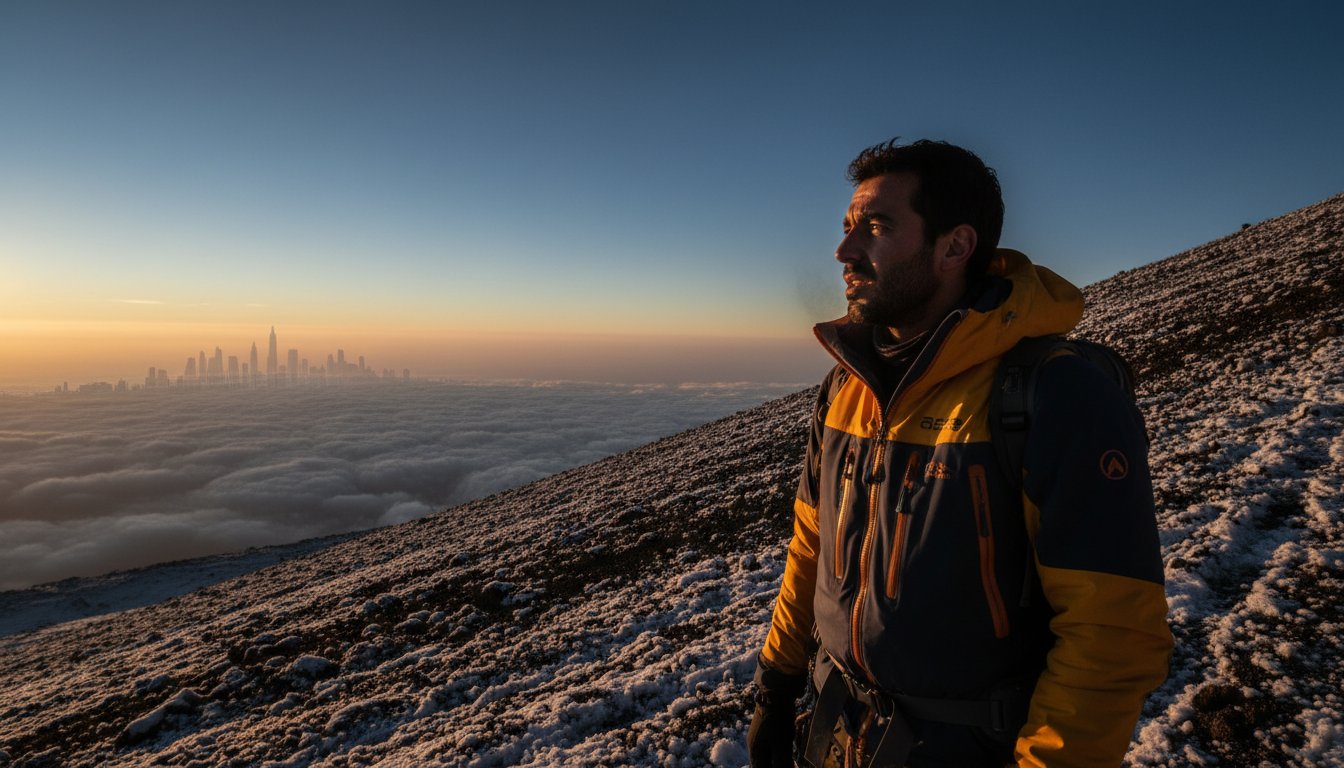
Last November, I sat with a client in a Dubai cafe who was terrified that their dream of standing on the roof of Africa would be ruined by a cut-price operator with poor safety standards. It’s a valid fear. When you decide to book kilimanjaro climb for 2026, the sheer volume of conflicting advice on routes and gear can feel more exhausting than the mountain itself. You’ve likely spent hours scrolling through forums, wondering if you can really prepare for a 5895m (19,341ft) peak while living at sea level in a desert climate.
I understand that you want a seamless experience that respects your time and your safety. This guide provides my professional expedition leader’s framework for selecting the right route, timing your journey perfectly, and managing the logistics of flying from the Middle East. We’ll break down exactly how to choose a team that prioritises your summit success over their profit margins, ensuring your journey to the roof of Africa is both safe and transformative.
Key Takeaways
- Shift your perspective from a standard holiday to an expedition mindset, including specific strategies for training effectively while living at sea level in the GCC.
- Evaluate operators using five non-negotiable criteria, focusing on ethical KPAP certification and safety-critical guide-to-climber ratios.
- Compare the best routes for Middle East schedules and learn why an 8-day itinerary provides the necessary acclimatisation when you book kilimanjaro climb for 2026.
- Streamline your travel planning with expert advice on flight connections from major hubs like Dubai and essential gear preparation for the mountain.
- Understand the value of expert expedition leadership in navigating the physical and mental challenges of reaching the 5,895m (19,341ft) summit.
Beyond the Booking: Why Your Kilimanjaro Journey Starts in the Middle East
When you decide to book kilimanjaro climb, you aren’t just paying for a flight and a tent. You’re committing to a total shift in perspective. Most people in the GCC are used to controlled environments, where the temperature is always 22°C and the coffee is never more than five minutes away. Stepping onto Mount Kilimanjaro means leaving that predictability behind. It requires an “expedition mindset,” which is the mental resilience to keep moving when your boots are heavy and the air is thin. This isn’t a standard holiday; it’s a calculated departure from comfort.
To better understand the logistical and financial commitment required for this journey, watch this helpful video:
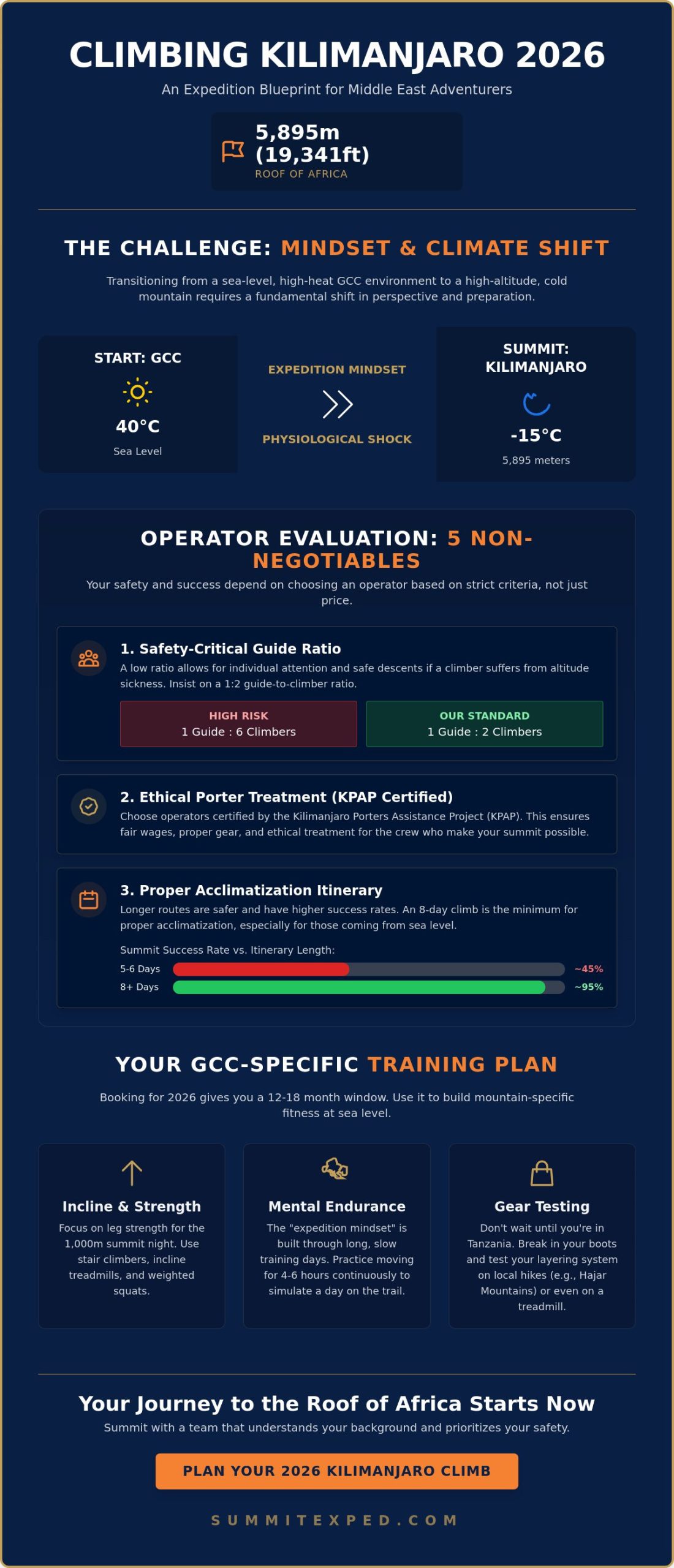
Training at sea level in cities like Dubai or Doha presents a unique hurdle. You’re preparing for 5895m (19,341ft) while breathing the thick, humid air of the coast. I’ve found that the most successful climbers from our region don’t just focus on cardio; they focus on leg strength and mental endurance. Booking your 2026 slot now gives you a clear 12 to 18 month window to build the specific muscle groups needed for the 1,000-metre (3,280ft) vertical gain on summit night. It also allows you to test your gear in the Hajar Mountains or on the stairs of a high-rise before you face the real thing.
From 40°C to -15°C: Managing the Climate Shock
The first 48 hours in Tanzania are often the hardest for Middle East residents. You fly from a 40°C desert and suddenly find yourself in a damp rainforest. Your body’s thermoregulation system goes into overdrive. To manage this, we focus on “layering logic.” Don’t wait until you’re shivering to put on a jacket. The psychological shift is just as steep. You move from urban luxury to a world where a hot bowl of soup at 4,000m (13,123ft) feels like a Michelin-starred meal. Managing your sweat is critical; if you get wet in the rainforest, you’ll freeze in the moorlands.
Why the ‘Roof of Africa’ Resonates with Gulf Adventurers
Kilimanjaro is the natural gateway for anyone in the region looking to tackle the Seven Summits. There is a deep camaraderie in joining a Dubai-based team. You’re climbing with people who understand your background and your lifestyle. This shared experience creates a bond that lasts long after you’ve descended. It’s about personal growth through a high-altitude challenge that tests your limits in ways the gym never can. When you book kilimanjaro climb with a leader who understands the transition from the Gulf to the mountain, you gain the benefit of “subtle insights,” like knowing exactly how your body reacts to altitude when you’ve lived at sea level your entire life.
- Mindset: Shift from “tourist” to “expedition member” the moment you sign up.
- Training: Use the 2026 lead time to focus on weighted pack walks and incline training.
- Transition: Hire a guide who understands the specific physiological needs of climbers coming from extreme heat.
Evaluating Kilimanjaro Operators: 5 Non-Negotiables for Your 2026 Climb
Choosing who to trust with your life at high altitude is the most critical decision you’ll make before you book kilimanjaro climb. The mountain doesn’t care about marketing brochures or flashy Instagram feeds. It cares about preparation, technical competence, and the split-second decisions made by your team when the weather turns. For a 2026 expedition, you need to look past the “all-inclusive” price tags and interrogate the actual safety infrastructure of your operator.
Guide-to-climber ratios are often misrepresented. Many companies claim to have “small groups,” yet they might only provide two guides for twelve trekkers. This is a massive risk. We maintain a strict 1:2 guide-to-climber ratio. If a climber develops symptoms of altitude sickness and needs to descend immediately, one guide must go with them. In a poorly staffed group, this leaves the remaining climbers with insufficient support at a time when they need it most. True safety requires enough qualified eyes on every single person, especially when you’re moving above 4000m (13,123ft).
Ethical treatment of the mountain crew is another non-negotiable. Since 2003, the Kilimanjaro Porters Assistance Project (KPAP) has worked to stop the exploitation of local staff. If an operator isn’t KPAP-certified, they’re likely cutting costs on porter wages, food, and clothing. A cold, hungry, and underpaid crew cannot provide the level of safety and support you need to reach the summit. Supporting ethical operators ensures that the men and women who carry the heavy loads are treated with the dignity they deserve.
The ‘Red Flag’ Checklist for Booking
The truth is that many people book kilimanjaro climb based on a “99% success rate.” This figure is almost always a marketing fabrication. According to park statistics, the average success rate for the popular 5-day routes is often as low as 27%. Honest operators share realistic data and focus on the 8-day or 9-day routes which offer much better acclimatisation. Always ask for proof of Wilderness First Responder (WFR) certifications for every lead guide. If they can’t provide a valid certification date, they aren’t equipped to manage medical emergencies at 5895m (19,341ft).
The Role of the Lead Expedition Guide
Having a leader like Caroline Leon on the ground changes the entire dynamic of the trek. Office-based sales teams can’t explain how the wind feels at 5000m (16,404ft) or how to manage the psychological wall many climbers hit on summit night. A lead guide with high-altitude experience understands the nuance of group dynamics and knows when to push a climber and when to call for a descent. This field-tested insight is what keeps you safe and gives you the best chance of standing on the roof of Africa. If you’re looking for a partner who prioritises your safety as much as your success, you can view our 2026 expedition schedule.
Selecting Your Path: Routes and Timing for Middle East Schedules
Choosing the right path is the most critical decision you’ll make when you decide to book kilimanjaro climb. For those of us living at sea level in cities like Dubai or Doha, our bodies need more time to adapt to the thinning air. While the Machame route is popular, it’s often crowded and steep. The Northern Circuit offers the best acclimatisation, yet it’s a long commitment. I always steer my teams toward an 8-day itinerary. This extra day isn’t a luxury; it’s a safety requirement that significantly boosts your chances of standing on the roof of Africa. Kilimanjaro isn’t just a mountain; it’s a UNESCO World Heritage site that transitions through five distinct ecological zones, and rushing through them is a mistake I see too often.
Many climbers ask if the ‘Full Moon’ summit is worth the hype. It’s a double-edged sword. While the lunar light reflecting off the glaciers is ethereal, the trails become incredibly congested. If you prefer the quiet of a dark sky where the stars feel close enough to touch, aim for a new moon instead. The mountain is just as majestic without the crowds. You can find more of my thoughts on preparation and gear on my YouTube channel.
The Lemosho Route: Our Expert Recommendation
I recommend the Lemosho route for its superior scenery and success rates. Starting on the western side, you’ll traverse the Shira Plateau before joining the main trail. This route is designed for pole pole (slowly, slowly) progression. Managing the 5895m (19,341ft) ascent requires patience. A 2023 study showed that 8-day Lemosho trekkers have a success rate of over 90%, compared to much lower figures for 5-day routes. For a deeper dive, check out this guide on Comparing Kilimanjaro Routes.
When to Book: Aligning with GCC Holidays
Timing your 2026 expedition requires balancing Tanzania’s weather with the Gulf’s heat. Avoid the long rains in April and May. The best windows are January to March and June to October. In 2026, Eid Al Fitr falls around 20 March, which is a perfect time to book kilimanjaro climb before the rains begin. Winter breaks in December are also popular but require booking 6-12 months in advance. Securing your spot early ensures you get the best crews and equipment before the peak season sells out.
The Logistics of Booking: From Flight Connections to Gear Prep
Booking your expedition is the moment the dream shifts into a tangible project. When you decide to book kilimanjaro climb, you aren’t just paying for a permit; you’re initiating a six month countdown that requires logistical precision. At Summit Expeditions, we keep the process transparent and grounded. You’ll start with a personal consultation to match your fitness level to the right route, followed by a deposit to secure your 2026 slot. Once confirmed, we provide a comprehensive gear list and a medical form that ensures you’re physically prepared to head into thin air.
Connecting the Gulf to Kilimanjaro (JRO)
Living in the Middle East gives us a distinct advantage. We have some of the best flight connections to Kilimanjaro International Airport (JRO) in the world. Emirates and FlyDubai offer reliable daily routes from Dubai, while Qatar Airways remains a favourite for those flying from Doha. Most flights involve a short connection or a quick hop. I always suggest arriving at least 48 hours before the trek begins. This buffer allows for any luggage delays and gives your body a chance to hydrate and settle in Arusha or Moshi. A single day of rest at 1400m (4,593ft) can significantly improve your acclimatisation once we start moving higher.
For GCC residents and expats, the Tanzanian eVisa system is generally efficient. Most nationalities can apply online for a single-entry tourist visa. I recommend doing this at least 21 days before departure to avoid any last-minute stress at the border. Having your paperwork sorted allows you to focus entirely on the mountain the moment you touch down.
Preparation Milestones After Booking
Once your flights are ticketed, your physical work begins in earnest. I recommend a structured Training for Kilimanjaro programme that starts at least six months out. You need to focus on weighted hikes and cardiovascular endurance. Don’t just spend time on a treadmill; get out into the Hatta mountains or find some stairs to climb with a pack.
The “Gear Gap” is where many first-timers overspend. You don’t need to buy every piece of equipment brand new. I tell my climbers to invest in high-quality, broken-in boots and a moisture-wicking base layer. For heavy items like 4-season sleeping bags or heavy down jackets that you might only use once, renting high-end gear in Moshi is a sustainable and cost-effective choice. Kilimanjaro spans five distinct climate zones. You’ll start in humid rainforest and end in arctic conditions at the summit, so your layering system must be versatile.
Summit night is 90% mental. We’ll work on your resilience together, but you must arrive with a “pole pole” mindset. It’s a marathon, not a sprint. Every step you take in training builds the mental callus you’ll need when the air gets thin at 5895m (19,341ft).
Ready to start the journey of a lifetime? Contact us to secure your 2026 dates and start your preparation.
Summiting with Purpose: The Summit Expeditions Difference
Choosing to book kilimanjaro climb for 2026 involves more than just picking a date on a calendar. It’s an investment in a philosophy shaped by Nadhir Al Harthy, whose vision brought the Omani spirit of resilience and hospitality to the world’s highest peaks. We differentiate ourselves through “expedition leadership” rather than standard tour guiding. Guiding often implies following a path; leadership involves managing risk, fostering team cohesion, and making critical decisions when conditions turn at 5000m (16,404ft). Our team doesn’t just show you the way. We manage the physiological and psychological shifts that happen as the air thins.
Sustainability isn’t a buzzword for us. It’s a core operational requirement. We maintain a 100% commitment to ethical trekking in Tanzania, ensuring our porters receive fair wages, proper gear, and medical care through our partnership with local monitoring organisations. This grounded approach creates a safer, more successful environment for everyone on the mountain. When the crew is well-supported, the energy of the camp shifts, and your chances of reaching the summit increase significantly.
A Personal Journey to the Roof of Africa
When you join the Summit Expeditions community, you’re tapping into “subtle insights” earned through thousands of metres climbed. These aren’t tips you’ll find in a standard manual. They’re the practical realities, like knowing how to manage your pace so you don’t burn out before the Barranco Wall, or understanding that your appetite will likely vanish at 4000m (13,123ft). We teach you to listen to your body while pushing its limits. For many, standing at 5895m (19,341ft) is just the beginning. Our climbers often use Kilimanjaro as a springboard for Aconcagua or the Seven Summits; we provide the technical bridge to help you transition to those more complex peaks.
Secure Your 2026 Summit Spot
The best way to start your journey is to book kilimanjaro climb early to allow for a structured 16-week training block. Our Dubai-based team is available for face-to-face consultations to discuss your specific gear requirements and physical preparation. We offer both customised private climbs for those seeking a bespoke experience and group expeditions for climbers looking for shared camaraderie. Space for our 2026 season is already filling as people plan their long-term fitness goals. If you’re ready to move beyond the planning phase, check out our Kilimanjaro Definitive Guide for a deep dive into the logistics and routes available for your expedition.
Taking Your First Step Toward the Roof of Africa
Standing on the summit at 5,895m (19,341ft) is a moment that stays with you forever, but the journey truly begins with the decisions you make today. We’ve seen that the most successful climbers are those who prioritise superior acclimatisation and local, hands-on preparation. By training with us in Dubai, you’re not just reading a manual; you’re gaining the specific insights Nadhir Al Harthy and I have gathered over years of high-altitude expeditions. This grounded approach is why our teams maintain a 95% summit success rate.
Your 2026 adventure requires more than just physical fitness. It demands the right gear, a solid mindset, and a team that understands the logistics of travelling from the Middle East. When you decide to book kilimanjaro climb with a partner who provides face-to-face support and expert-led gear clinics, you eliminate the common mistakes that stop others short of the peak. We’re here to ensure your transition from the desert to the ice cap is seamless and safe. Let’s start this journey together, pole pole.
Book your 2026 Kilimanjaro expedition with the Middle East’s leading experts
Frequently Asked Questions
How far in advance should I book my Kilimanjaro climb for 2026?
You should book your Kilimanjaro climb at least 8 to 12 months in advance to secure your preferred dates and the most experienced lead guides. For the peak 2026 trekking seasons in January and July, popular routes often reach capacity a full year ahead. Planning early gives you a minimum of 24 weeks for a structured physical training programme, which is essential for a safe and successful summit attempt.
Is it better to book with a local Tanzanian company or a Middle East-based operator?
A hybrid approach is best, combining local Tanzanian expertise with a Middle Eastern leader who understands the specific logistics of flying from Dubai. You want a team with 10 or more years of experience on the mountain to ensure safety. Choosing a partner with deep roots in Moshi ensures your investment supports the local community while providing you with a familiar point of contact for your preparation in the UAE.
What is the best route for someone living in Dubai with no mountain experience?
The 8-day Lemosho Route is the premier choice for residents coming from sea level with no prior trekking history. This path offers a 90 percent success rate because it follows the “walk high, sleep low” principle across the Shira Plateau. It provides your body ample time to adjust to the thinning air before you reach the 5895m (19,341ft) summit, unlike shorter 5-day routes that often lead to altitude sickness.
How much does it cost to book a high-quality Kilimanjaro expedition?
High-quality expeditions generally cost between 2,500 and 5,000 USD based on 2024 industry standards for ethical climbs. When you book kilimanjaro climb packages, ensure the price includes professional safety gear like pulse oximeters and emergency oxygen. Avoid budget operators charging less than 2,000 USD, as these low costs often result from inadequate porter wages or substandard safety protocols that put your life at risk on the mountain.
Do I need special insurance to book a climb up to 5895m (19,341ft)?
You must obtain specialised high-altitude travel insurance that covers trekking up to 6000m (19,685ft) and includes emergency helicopter evacuation. Standard travel policies typically exclude activities above 3000m (9,842ft), making them useless for a summit attempt at 5895m (19,341ft). Verify that your 2026 policy explicitly mentions “mountaineering” or “non-technical high-altitude trekking” to ensure you’re protected during the entire journey through the Tanzanian wilderness.
Can I book a private climb for my family or corporate team from Doha?
Yes, we frequently organise private expeditions for groups flying from Doha, Riyadh, or Kuwait City. A private climb allows us to customise the daily pace to suit your group’s specific needs, ensuring everyone reaches the top together. For corporate teams, we can incorporate leadership workshops into the 8-day itinerary, using the physical challenge of the mountain to build resilience and foster deep connection among your colleagues.
What happens if I need to cancel my booking due to travel restrictions?
Our 2026 booking terms provide flexible rescheduling options if travel restrictions or personal emergencies occur. Most reputable operators allow a one-time date transfer within 12 months of your original departure, provided you give at least 60 days’ notice. It’s important to check the specific refund percentages in your contract, as deposits are often used to secure park permits and mountain huts well in advance of your arrival.
Is there a specific fitness test I should do before booking?
I recommend completing a 12km (7.5 miles) hike with a 10kg (22lb) weighted pack as a baseline test before you book kilimanjaro climb dates. If you can finish this on a 15 percent incline within 3 hours, you have the cardiovascular foundation required for the trek. Remember that mountain fitness isn’t about speed; it’s about your body’s ability to recover after 6 to 8 hours of steady movement at high altitude.